 By Ethan Lewis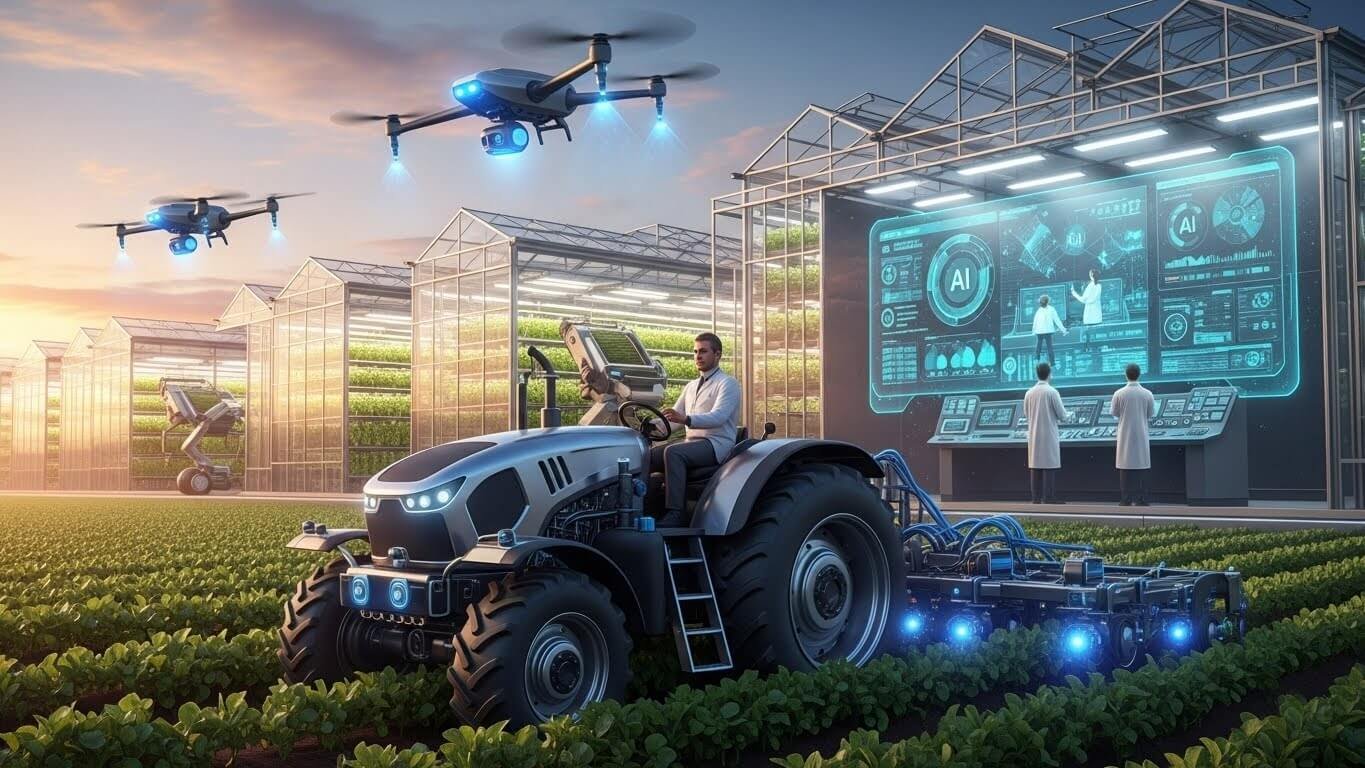
Food production has always been the staple of human existence, and the manner in which food is produced is evolving at a very fast rate. Farmers are being compelled by climate challenges, population growth, and resource scarcity to revisit traditional methods. The current world is entering a period of innovation, defining a new era in which Agricultural Technology is at the core of ensuring that farming becomes smarter, more efficient, and sustainable. The centre of this change is the concept of Artificial Intelligence, which is assisting farmers in the transition from the manual decision-making phase to the precision of data.
This change is not concerning the replacement of farmers. It is regarding providing them with more effective tools to grow crops and increase the harvest, and ensure the future of the world’s food systems.
The Future of Agriculture Technology through Artificial Intelligence.
Contemporary farming is no longer about tractors and irrigation systems. It now has in its arsenal smart sensors, drones, predictive software, and automated machinery. Artificial Intelligence takes these tools to the next level through processing vast quantities of agricultural data in real-time.
AI systems are able to examine the health of soil, weather, crops, and water use to make improved farming choices. Farmers will gain with proper insight,s which will enable them to plant at the appropriate time, optimize the resources,s and react promptly to the evolving situations.
This transformation enables farming to be more accurate,e leading to wastage and enhanced production.
Smarter Gray Box Crop and Yield Management.
Among the most significant advances of AI-based Agriculture Technology, there is better crop management. AI technologies are used to observe the health of plants by taking drone and satellite pictures. Such systems can identify the presence of disease, pests, and deficiency of nutrients at a very early stage before the human eye can see them.
This is because farmers can then take specific measures as opposed to treating the entire fields since the issues are identified early. This is not only cost-saving but also has a minimum impact on the environment. Good crops result in increased production, improved quality of produce, and consistent harvests.
With time, AI gets to learn from the past season, and thus, predictions in the future become even more precise.
Water and Resources, Efficient use.
One of the largest threats to agriculture is water scarcity currently. AI-controlled irrigation technologies use soil moisture, weather, and crop demands to provide water when and where it is required.
Such efficiency decreases the amount of water waste and provides crops with the best hydration. Artificial Intelligence can also be utilized in the optimization of fertilizers and pesticides, saving on expenditure and minimizing releases into the environment.
These developments enable farmers to attain sustainability targets and still be very productive.
Precision Ag and Automation.
Automation is an indispensable aspect of the current Agriculture Technology. The AI-inspired machines can plant, harvest, and weed without involving humans much. The machines are precise in their execution, and they eliminate the need to put in more labor, and are while enhancing speed.
Precision farming enables farmers to treat every piece of land in a different way according to certain requirements. Artificial intelligence systems allow tailored care to each crop area, as opposed to treating areas equally.
This method enhances efficiency and saves the soil to be used by the generations to come.
Helping Farmers to make better decisions.
Agriculture means a myriad of decisions every day, all of which are subject to environmental forces beyond control. Artificial Intelligence is something that can aid farmers, offering them data-based recommendations.
Artificial intelligence platforms use past data and real-time information to make recommendations about the appropriate planting, fertilizing, or harvesting activities. This helps in eliminating the uncertainty and enables farmers to plan in advance with confidence.
AI-based tools can be used even by a small-scale farmer since the results of their use are presented in a user-friendly format, in the form of mobile apps.
Reducing Risk and Adapting To Climate Change.
The issue of climate change has seen agriculture become unpredictable. Pests, which pose challenges, extreme weather, and changing seasons, are constant. AI assists farmers in their weather patterns and gauges the possible dangers.
Through sophisticated forecasting, farmers will be in a position to plan against droughts or floods or even against the changes in temperature before they damage the farm. This is proactive to safeguard crops and stabilize food supply chains.
Farming will be more resilient and future-ready by combining the use of agricultural technology with climate information.
Responsible and Ethical Artificial Intelligence Usage in Agriculture.
With the increasing integration of AI in the agricultural sector, there is a need to use AI responsibly. Privacy, accessibility, and equity should be taken into consideration to make sure that all farmers benefit, and not only large farms.
The contribution of human expertise is also essential. AI devices are not meant to oust the expertise and experience of farmers. The collaboration between technology and human judgment strengthens agriculture and makes it more balanced.
Future: The Future of Farming.
The future of agriculture technology fueled by Artificial Intelligence is an innovative and sustainable one. With the further development of AI, the agriculture industry will become more dynamic, efficient, and greener.
Through the prudent adoption of these tools, agriculture will be able to address food needs across the world and still conserve natural resources. Technology is assisting farmers to work smarter rather than harder in the fields for the future.