 By Sundar Pichai
Introduction: The Rise of Kompama and Its Role in Future Tech
In recent years, technological advancements have rapidly reshaped industries across the globe. Among the emerging technologies, Kompama is gaining significant attention as a game-changing force in both retail and technology. As we move into the future, Kompama is positioned to not only disrupt traditional business models but also provide innovative solutions to real-world problems, such as improving operational efficiency and transforming customer experiences.
Kompama represents a convergence of multiple technologies, possibly including artificial intelligence (AI), machine learning, and big data, to create new opportunities for businesses. In this article, we’ll dive deep into Kompama, exploring its core concept, current adoption, use cases across industries, and future outlook. Let’s explore how Kompama is poised to revolutionize the retail landscape and beyond.
What Is Kompama?
Definition and Core Concept
Kompama is a versatile technology platform designed to address inefficiencies in business processes, particularly in the retail sector. Although still emerging, the technology appears to combine AI, automation, and data analytics to streamline operations, enhance customer experiences, and improve decision-making across various industries. The platform aims to optimize workflows, reduce costs, and enable businesses to meet the evolving needs of consumers in an increasingly digital world.
The name Kompama may refer to both a Lithuanian company involved in retail innovations and a conceptual AI-driven technology being developed to push the boundaries of customer interaction and business management. While the company itself is building its brand in retail, the technology behind Kompama is pushing forward as an innovative force that could significantly alter how businesses interact with data and customers.
Current Adoption Status of Kompama
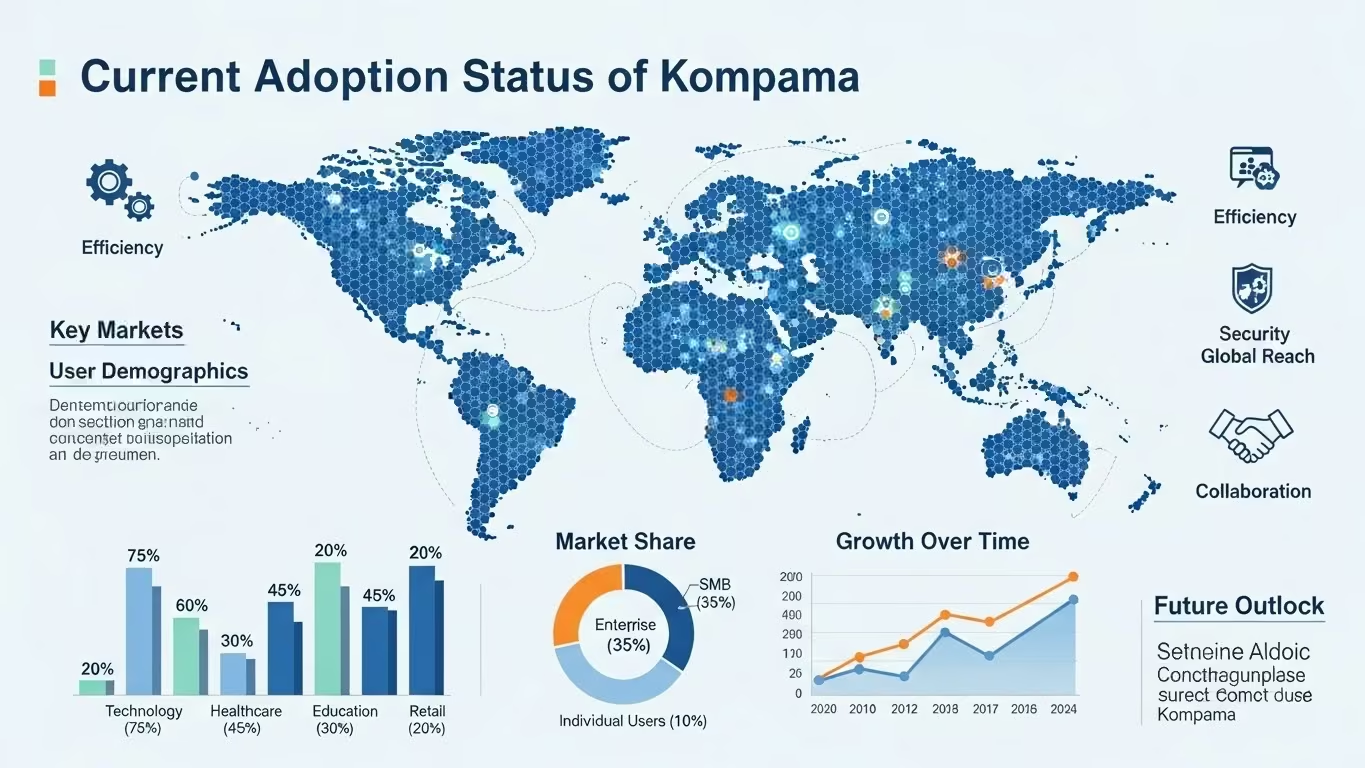
Early Adoption in Retail and Technology Sectors
Although still in its nascent stages, Kompama is already gaining traction in the retail sector, where its AI-powered tools are being leveraged to optimize inventory management, improve customer service, and offer personalized shopping experiences. Leading retailers are beginning to explore Kompama’s potential to reduce waste, enhance product recommendations, and streamline logistical operations.
Kompama is also making waves in technology-driven sectors. By utilizing machine learning and real-time data processing, Kompama enables businesses to make data-driven decisions with speed and accuracy. For example, Kompama’s ability to analyze customer behavior can lead to targeted marketing strategies that increase customer engagement and drive sales.
Growing Adoption in Emerging Markets
Countries with rapidly expanding digital economies, such as India and Southeast Asia, are beginning to see Kompama as a solution to improve both business operations and consumer experiences. With the rise of e-commerce and online retail, Kompama’s role in improving the digital shopping experience is becoming more critical. As more businesses in these regions recognize the value of AI and big data, the demand for innovative solutions like Kompama is expected to grow exponentially.
Use-Cases of Kompama Across Industries
1. Retail Industry: Enhancing Customer Experience and Operations
The retail sector stands to benefit significantly from Kompama. By utilizing AI and machine learning, Kompama can predict consumer behavior, optimize product recommendations, and enhance customer personalization. In brick-and-mortar stores and online platforms, Kompama helps retailers:
- Personalize the shopping experience: Through data analytics, Kompama can predict customer preferences and recommend products in real-time.
- Optimize inventory management: By analyzing consumer demand, Kompama ensures that retailers have the right products in stock at the right time, reducing overstocking and stockouts.
- Streamline logistics: Kompama can track products throughout the supply chain, enabling businesses to improve efficiency and reduce delays.
2. Manufacturing: Automation and Efficiency Gains
Kompama’s technology isn’t limited to retail—manufacturing industries are also seeing its benefits. By integrating AI-driven automation into production lines, Kompama helps manufacturers optimize operations, reduce waste, and improve production timelines. Through real-time data processing, it allows for predictive maintenance, helping companies avoid costly downtime.
For example, Kompama’s AI can monitor the health of machinery, predicting when a part might fail and scheduling maintenance before a breakdown occurs. This helps manufacturers maintain continuous production and maximize efficiency.
3. Healthcare: AI for Better Patient Outcomes
While still emerging in healthcare, Kompama’s AI is being explored for improving patient care. By analyzing large datasets of medical records, Kompama could assist healthcare providers in diagnosing diseases early, predicting patient outcomes, and suggesting personalized treatment plans. As healthcare providers move toward data-driven decision-making, Kompama could play a vital role in ensuring better patient outcomes.
Challenges and Ethical Considerations
1. Data Privacy Concerns
As Kompama relies heavily on big data and AI algorithms, data privacy is a significant concern. The collection and analysis of sensitive consumer and patient data require strong safeguards to protect individual privacy. Companies using Kompama must ensure compliance with data protection laws, such as the General Data Protection Regulation (GDPR) in Europe, to avoid data breaches and misuse.
2. Algorithmic Bias
AI-powered technologies like Kompama are only as good as the data they are trained on. If the data contains inherent biases, the AI may inadvertently perpetuate these biases, leading to unfair treatment of certain groups. For example, biased recommendations in retail could exclude certain demographics from personalized offers. Developers must continually assess and mitigate bias in the system to ensure that Kompama remains ethical and fair in its applications.
3. Job Displacement Concerns
As Kompama’s automation capabilities grow, concerns over job displacement in industries like retail and manufacturing are inevitable. While automation can increase productivity, it can also reduce the need for certain manual jobs. Companies must address these challenges by retraining workers and ensuring a smooth transition for employees impacted by automation.
Future Outlook: Where Is Kompama Heading?
1. Expansion in AI and Automation
As Kompama continues to evolve, it will likely expand its capabilities to incorporate even more advanced AI and automation tools. Future iterations of Kompama may integrate robotics and augmented reality (AR) into retail, providing immersive shopping experiences and further streamlining operational processes.
2. Wider Adoption Across Industries
In the next decade, we expect to see Kompama expand its reach beyond retail and manufacturing into sectors like finance, transportation, and energy. As AI-driven solutions become more prevalent, Kompama will be central in driving innovation and improving efficiency across diverse industries.
3. Global Expansion
With growing demand in emerging markets, Kompama’s global footprint will likely increase. As more businesses in Asia, Africa, and Latin America recognize the benefits of AI-powered technologies, Kompama will provide tailored solutions that cater to regional market needs, helping companies in these regions compete on a global scale.
Conclusion: Kompama’s Impact on the Future of Technology
Kompama is on the brink of revolutionizing industries by combining AI, big data, and automation to enhance business efficiency and customer experience. While challenges such as data privacy and job displacement must be addressed, the potential benefits of Kompama’s adoption are undeniable. As the technology matures, it will play a key role in shaping the future of retail, manufacturing, healthcare, and many other sectors.
Businesses looking to stay ahead in a rapidly evolving landscape must keep an eye on Kompama and its growing influence on global industries. The future is bright for this innovative platform, and we can expect it to continue driving technological transformation well into the next decade.
FAQs
1. What is Kompama, and how does it work?
Kompama is an AI-driven platform designed to optimize business processes, particularly in retail and manufacturing. It uses big data and machine learning to improve efficiency and enhance customer experiences.
2. Which industries are benefiting from Kompama?
Kompama is being adopted in industries such as retail, manufacturing, and healthcare, where its AI-powered tools improve operations, reduce costs, and enhance service delivery.
3. What are the ethical concerns surrounding Kompama?
The main concerns include data privacy, algorithmic bias, and job displacement. Companies must address these challenges by ensuring data security, fairness, and retraining opportunities for workers.
4. How will Kompama evolve in the future?
As technology advances, Kompama will likely expand its AI and automation capabilities and be adopted in more industries. It will also become more integrated with emerging technologies like robotics and augmented reality (AR).
5. Can Kompama help small businesses?
Yes, Kompama’s AI-driven tools can benefit small businesses by improving operational efficiency, enhancing customer engagement, and offering personalized solutions, allowing them to compete with larger players.