 By Sundar Pichai
Introduction
Smartphones have been the center of our digital lives for over a decade, but tech giants are now focusing on what comes next. As technology advances, many companies are shifting their attention beyond smartphones, exploring new devices and experiences like augmented reality (AR), wearables, and AI-driven systems. The future of tech is about more than just a better phone — it’s about seamless integration into our lives, making technology more intuitive and less intrusive.
In this article, we’ll explore the bold visions tech giants have for life after smartphones, what these advancements mean for us as users, and how they could reshape the way we interact with the world around us. Get ready for a glimpse into the future of technology.
Why We’re Ready for Something Beyond Smartphones
Pain Point: The Limits of the Smartphone Experience
Most people agree on a few things:
- Smartphones are indispensable… but demanding.
- Notifications pull attention away.
- Small screens make complex tasks tiring.
- Multitasking often feels clunky or inefficient.
Smartphones gave us convenience, but they also tied us to them. And as powerful as phones are, many users feel they’re reaching a plateau in innovation.
What Tech Giants Are Really Working On
Big brands aren’t just thinking about better cameras or more storage anymore. They’re reimagining the entire concept of interaction — how we see, hear, speak, and experience technology.
Here are the major technologies driving that shift.
AR Glasses — The Next Personal Display
What They Are
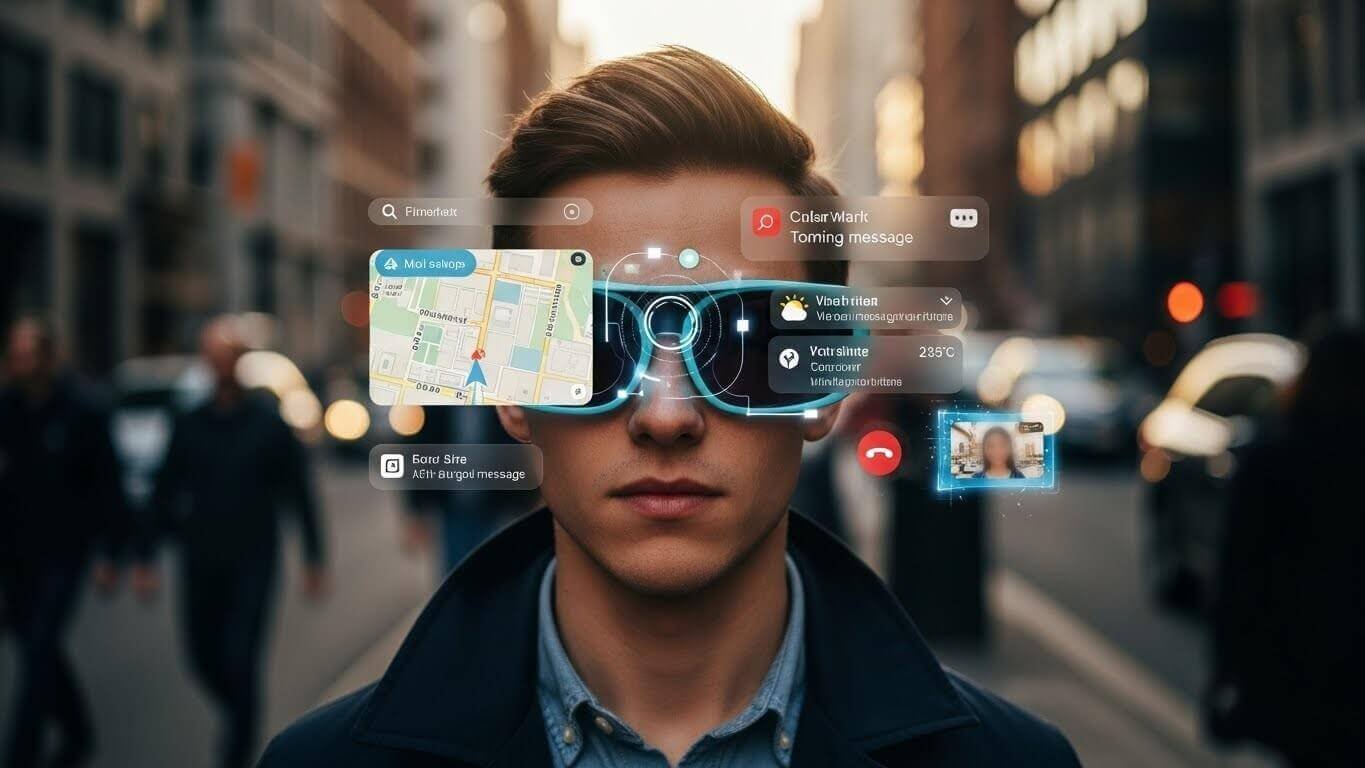
Augmented reality (AR) glasses overlay digital information on the real world. Instead of looking down at your phone, you see prompts, directions, messages, or visuals through lightweight glasses.
Why It Matters
No more checking your phone in front of people. Navigation directions appear in your field of view. At a concert, lyrics float on the stage. At work, tools and text appear beside your desk. Its technology is integrated into life, not separate from it.
User Desires Addressed
- Hands‑free access
- Reduced screen fatigue
- Subtle digital interaction
Real Progress
Apple’s Vision Pro and similar next‑gen AR devices hint at what’s coming — interfaces without screens but with deep utility, blending digital and real experiences.
Wearables — Supercharging What Smartwatches Started

Smartwatches were step one. Wearables are step two.
Beyond Notifications
Modern wearables are becoming:
- Health monitors (heart, oxygen, stress)
- AI assistants responding to voice
- Real‑time translators
- Gesture‑controlled interfaces
Instead of grabbing your phone to check your heartbeat, your wearable can do it discreetly and instantly.
Pain Point Solved
Users often turn to their phones too often — wearables replace that need with instant, glance‑level info.
Voice and AI — The Invisible Interface

What’s Changing
AI assistants like Google Assistant, Siri, and Alexa are becoming much smarter. We’re moving from touch → voice → predictive voice + context awareness.
Imagine:
- Your tech knows your goals before you ask
- Your schedule adapts automatically
- Your devices suggest only what matters
This helps eliminate the phone as an obligatory interaction tool.
IoT — A Connected World Where Your Phone Isn’t Center Stage
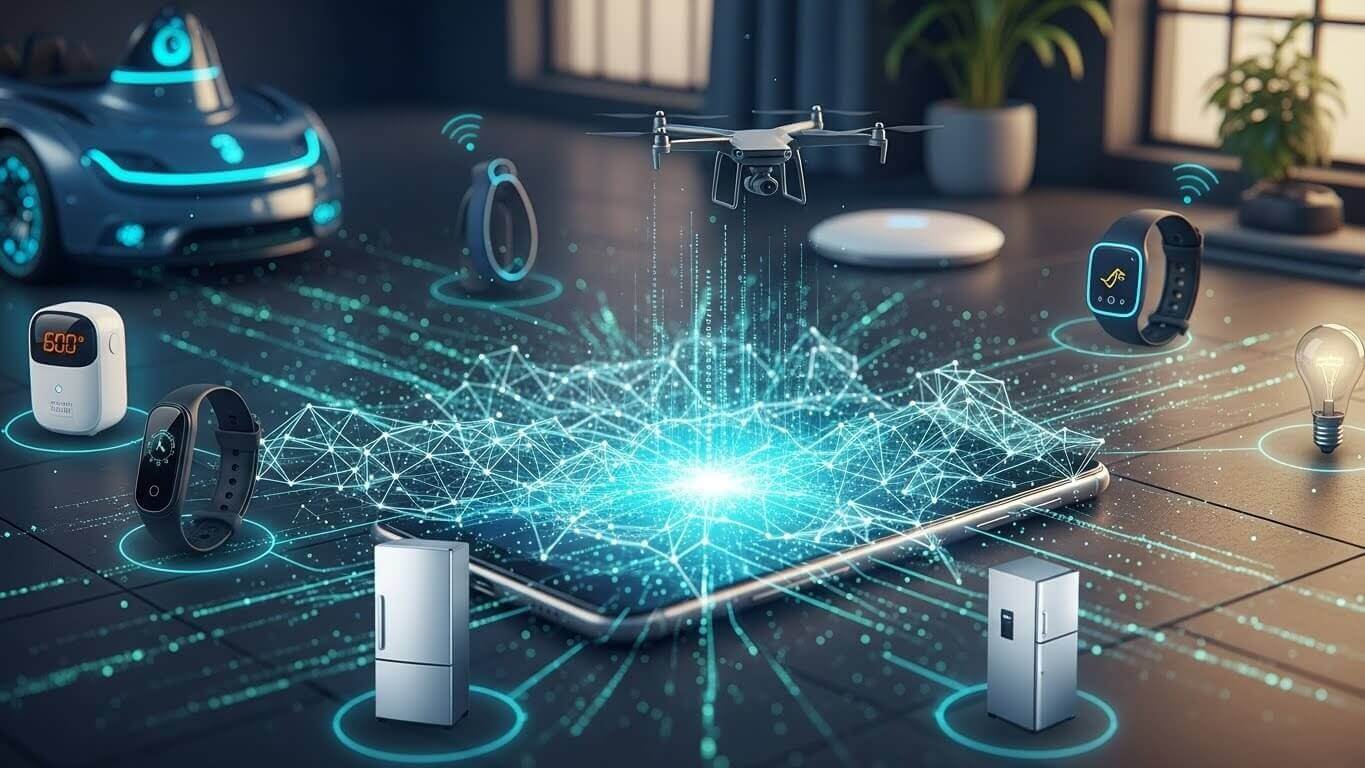
The Internet of Things (IoT) connects devices:
- Your thermostat
- Your car
- Your smart home speakers
- Your kitchen appliances
Instead of your phone as the hub, tech giants are building a mesh of connected intelligence. AI becomes the conductor, not the device in your pocket.
Real Examples Tech Giants Are Already Building
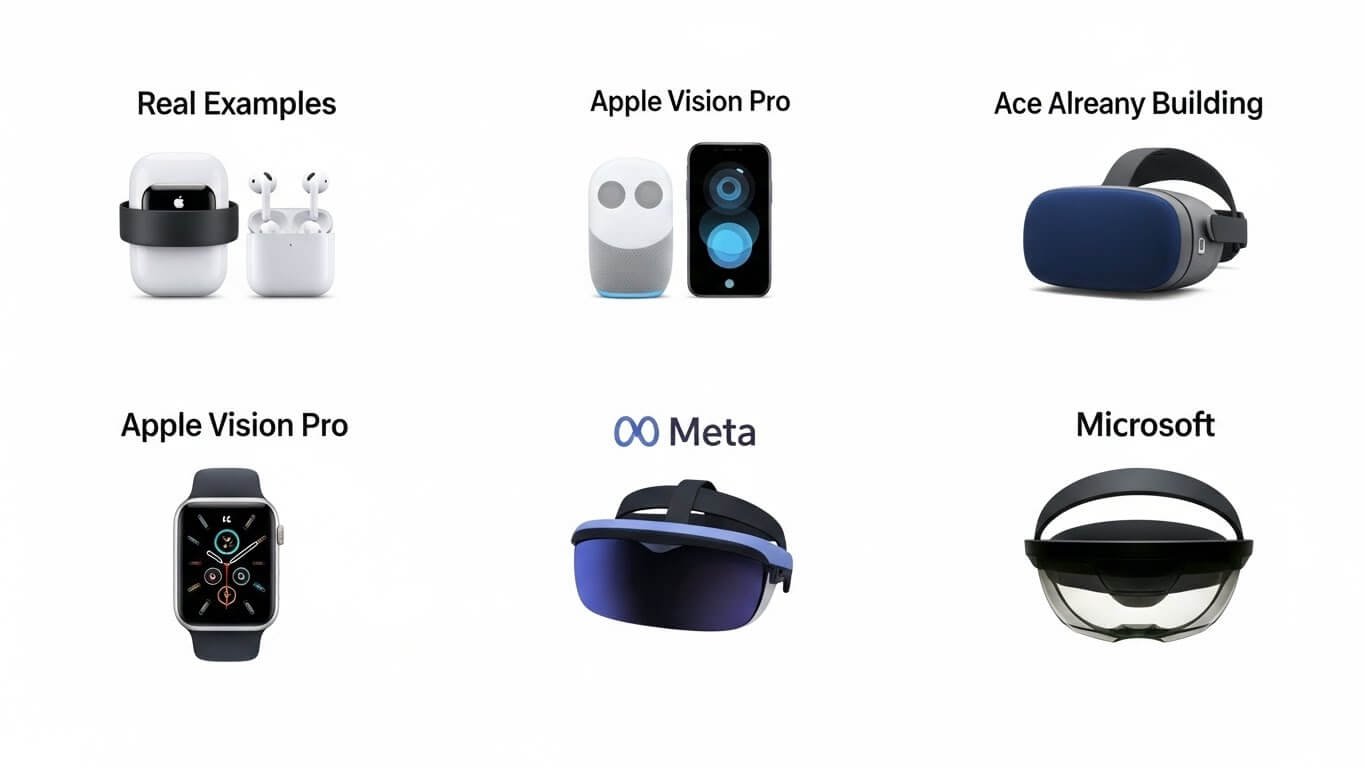
Apple
Apple is taking bold steps beyond the traditional smartphone model. The company is heavily investing in wearables like the Apple Watch and AirPods, and expanding its augmented reality (AR) research. Apple’s push into health data ecosystems allows users to track their well-being without relying on their phones.
Devices like the Apple Vision Pro demonstrate how the company is transitioning toward a future where AR experiences, powered by wearable tech, replace the need for constant phone interaction.
Google is focusing on AI-driven technology and augmented interfaces to create smarter, more intuitive experiences. The company is developing voice-first experiences that allow users to interact with devices and services using only their voices.
By integrating AI into everything from smart home devices to personal assistants like Google Assistant, Google is paving the way for a future where the phone is no longer the primary control device in our lives.
Meta
Meta (formerly Facebook) is investing heavily in virtual reality (VR) and immersive digital worlds. With platforms like Horizon Worlds, Meta is reimagining social interaction in virtual environments where users can connect, work, and play without ever having to tap a smartphone screen.
Meta’s focus on the metaverse and AR glasses signals a shift towards fully immersive, presence-based experiences that will redefine how we engage with technology.
Microsoft
Microsoft is integrating artificial intelligence (AI) into its productivity tools, such as Microsoft 365 and Teams, to enhance collaboration and workflow. Alongside AI, Microsoft is also investing in mixed-reality hardware like HoloLens to enable immersive work environments that blend the physical and digital worlds.
Their vision is a future where traditional devices like smartphones are supplemented—or even replaced—by more advanced, immersive technologies for professional and personal use.
Each company approaches this future differently, but all agree on one thing: the smartphone will evolve, not dominate forever.
What This Change Means for You
Less Screen Time, More Life Time
People crave presence. Phones demand attention — which can lead to stress and distraction. Technology that blends into daily life offers:
- Better focus
- Less digital noise
- More meaningful use of technology
More Natural Interaction
Voice, gesture, glance — these feel more human than tapping tiny icons. Tech that aligns with human behavior feels less like a chore and more like a tool.
Personal and Professional Benefits
From hands‑free directions to real‑time translations in travel, to health insights that matter — the benefits are practical, not just futuristic.
Common Fears and Realistic Expectations
“Will phones disappear tomorrow?”
No. Smartphones won’t vanish overnight. Instead, they will become part of a larger ecosystem that includes AR, wearables, and AI assistants.
“What if it’s too expensive?”
Like all tech evolutions, prices will drop over time. Today’s premium AR devices are early‑stage; tomorrow’s mainstream versions will be affordable.
“Is privacy safe?”
Privacy conversations are happening now. Tech giants are investing in on‑device AI and encrypted systems to protect user data. The future will need emphasis on trust and transparent policies.
How to Prepare for the Post‑Smartphone Future
1. Learn to Use Voice Control Now
Start using voice assistants for daily tasks. It reduces reliance on screens.
2. Explore Wearables
Smartwatches are the gateway — check your health, payments, messages — without a phone.
3. Practice Mindful Tech Use
Set boundaries now so that new devices enhance life rather than dominate it.
Conclusion: A Future More Human Than Digital
Tech giants envision a future beyond smartphones, not because screens are bad, but because life demands more seamless integration. The next wave of innovation will make tech less intrusive, more intuitive, and more human‑centric.
This isn’t science fiction. It’s gradual, intentional progress — technology shaped around how we live, think, move, and experience the world.
If you’ve ever felt tethered to your phone, this next phase promises freedom: a world where digital tools serve life — not interrupt it.
FAQs
1. What does “future beyond smartphones” mean?
It refers to tech that doesn’t rely on a phone as the central interface — like AR glasses, wearable AI, voice ecosystems, and smart environments.
2. Will smartphones disappear?
Not immediately. They will evolve into nodes within a broader ecosystem of wearable and immersive tech.
3. What pain points does this future address?
It reduces screen overload, increases convenience, improves natural interaction, and integrates tech into context rather than interruption.
4. Are AR glasses practical today?
Current models are early‑stage but functional. As hardware improves, it will become more lightweight, affordable, and widely adopted.
5. How soon will this future arrive?
We’re already in transition. Mainstream adoption of AR wearables and AI ecosystems could happen over the next 3–7 years.