 By Books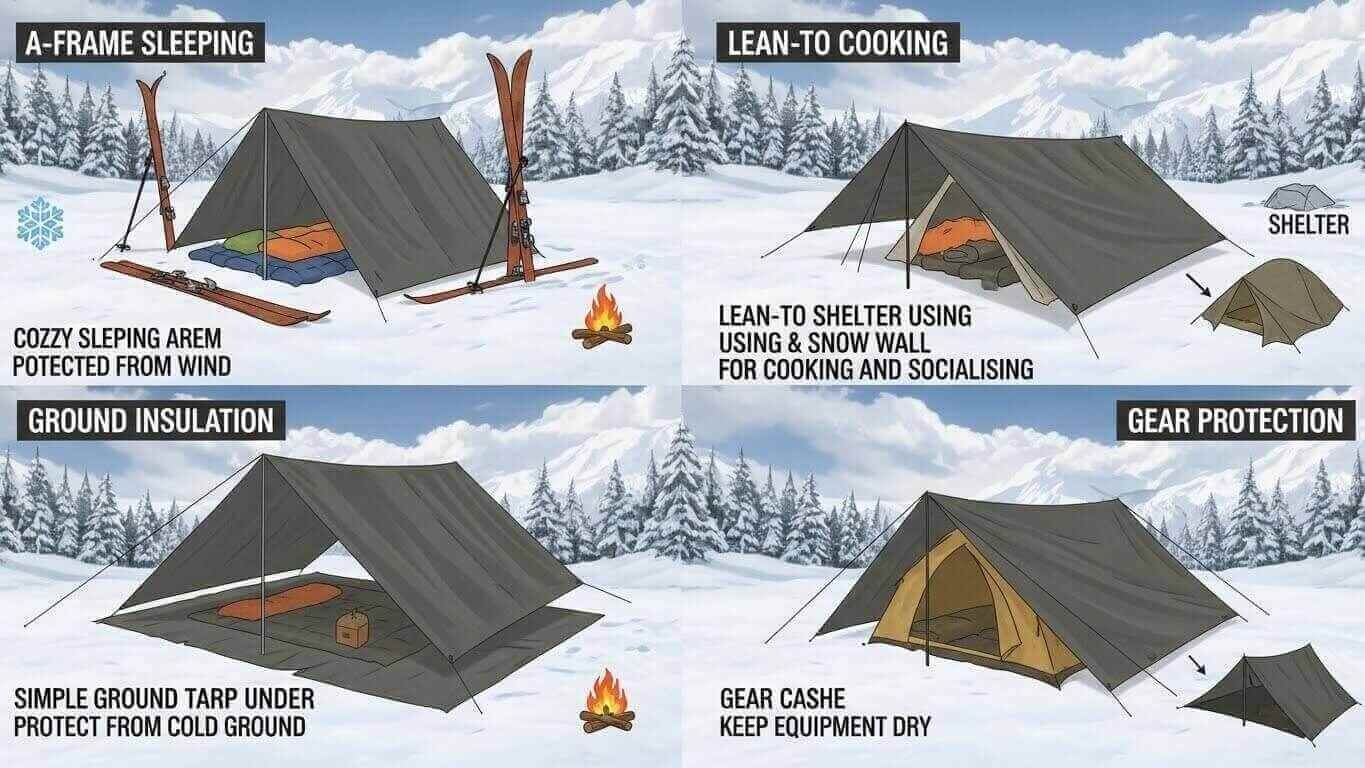
Winter camping is quite peaceful. There is magic in winter camping. The snow blankets sound and light. On the other hand, cold winter nights can be very challenging for campers seeking comfortable rest; therefore, choosing an appropriate shelter becomes essential. Tarpaulins are very helpful in winter camps. The equipment is cheap and lightweight.
Additionally, tarpaulins are very flexible. The equipment will make winter camping warmer and drier. In this way, many people use tarpaulins. The following are tarpaulin hacks. You will rest warmly and safely. However, your carry load will be lighter.
Why Tarpaulins Matter in Winter Camps
Cold weather means the loss of heat quickly. Wind drives the cold. The melted snow will refreeze at night. First and foremost, the best thing about them is the protection they provide against the elements; consequently, a Heavy Duty Tarpaulin shields you from wind and moisture. In addition, it reflects heat when properly positioned; moreover, unlike tents, tarps offer greater versatility. You can alter the angles depending on the changing weather. In addition, any kind of patching up seems easy.
Choosing the Right Tarpaulin for Cold Nights
Material and Thickness Basics
Some tarps cannot handle snow effectively. Thin tarps will wave and rip. That is why it’s good to consider the thickness in the winter season. A heavy-duty tarpaulin has the strength to withstand wind and heavy weights. It’s able to carry the weight of the snow. It’s also best because the edges are strong and will not rip. Meanwhile, the tautness holds the grommets in place.
Using Snow to Your Advantage
Snow is insulating when packed. Thus, stomp a ground first. Solid ground prevents heat loss. Further, it prevents melting when you stand on it. Meanwhile, create small walls using the snow. They shield against the air near the ground. Accordingly, it helps tarps function well.
Tarpaulin Ground Hacks for Warmth
Creating a Dry Base Layer
Cold ground leads to body heat loss quickly. So, the next step is always to put a tarp beneath the shelter. Just make sure the edges go upwards. This will help prevent the formation of meltwater. Doing this will also prevent the entry of moisture. Dryness translates to warmth.
Layering With Natural Materials
By itself, the tarp is cold. Hence, insulation goes on top of it. Pine needles, dead grass, or foam mats can be used for insulation. These layers go on top of the tarp. Finally, keep the layers balanced to ensure sleeping comfort.
Wind Blocking Tarpaulin Shelters
Low Profile A-Frame Setup
Wind accounts for the highest component of heat loss. Thus, shelters should be low. Campers prefer an A-frame tarp in windy conditions. Pitch the tarp close to the ground. Additionally, the ends should slope towards the direction of the wind. Flapping will be minimal. On the other hand, the lines will be tight. A steady tarp prevents the loss of heat.
Lean-To With Reflective Wall
Sometimes the wind can change direction. So, set up flexible shelters. You can build a lean-to shelter around a fire. A tarp wall with reflectivity will be behind you. This will reflect the warmth in front of you. The breeze will also be blocked, creating a warmer area. This will happen at night.
Site Selection Before Setup
Reading the Winter Landscape
Where you camp determines warmth. Cold-air sinks into a valley. That means it’s best to avoid an area in a valley. Look for a slightly higher elevation, or find some trees. Trees protect from the wind, trap warmth, but don’t camp under limbs that are dead. Too much snow can make them break.
Budget Options That Still Perform
The cost will matter to some of the campers. Quality need not necessarily cost a lot. There is still use for a Budget Tarpaulin. Select the coated material with robust seams. Furthermore, avoid thin sheets of plastic materials. This is because they will crack when it becomes cold. So, check it prior to purchasing it. In that way, it will be useful despite having budget prices.
Snow Load Management Techniques
Sloped Roof Angles Matter
Tarps hold snow. This quickly adds weight. Therefore, always angle the roof. The steeper the roof, the easier snow falls off. Also, check the lines before bed. Keeping the lines taut prevents sagging. In the meantime, remove snow when falling heavily. This prevents collapse.
Reinforcing Stress Points
Freezing hardens fabric. As a result, stress areas must be handled carefully. Use smaller sticks as spacers. Position these between the tie-down areas to distribute the weight evenly. Similarly, cushion the edges with cloth. This will prevent scratches from the ice.
Heat Retention Tricks using Tarpaulins
Creating a Heat Trap Zone
The warm air rises and escapes. Thus, smaller openings at night. Close gaps around the head and feet. Yet, leave a small ventilation opening. Unfrozen air inhibits condensation. Just enough heating and ventilation are required.
Reflective Surfaces for Extra Warmth
Some tarps have reflective sides. Use them correctly. Leave the reflecting sides inward. This will reflect the body heat. This will also increase the warmth of the fire. On the other hand, avoid direct contact with the flame.
Managing Condensation in Cold Weather
Understanding Moisture Build Up
Breathing produces moisture at night. In cold climates, it freezes in fabric. As a result, ventilation is important. Without the flow of air, frost will be produced. But micro holes can eliminate frost.
Simple Vent Placement Tips
Vents must be placed high and low. The warm air leaves from high vents. The cool air comes in from low vents. This means that the flow of air is gentle too. In addition, everything must not be sealed tightly together. This balance is used for drying and heating.
Tarpaulin Hacks for Cooking Areas
Covered Cooking Zones
Winter cooking requires shelter. Blowing wind carries away heat from cooking stoves. Thus, build a tarp windbreak. Place it at an angle. This will help prevent wind. At the same time, let its sides be open. Fumes should be given space to move away.
Snow Melt Management
It melts snow near you. Water accumulates quickly. Thus, slope your tarp-covered ground. Turn the gear away from the runoff. In addition, create shallow drainage ditches in snow. They will keep your camp dry.
Emergency Tarpaulin Uses in Winter
Quick Shelter During Storms
The weather may change very quickly. Pack your tarpaulin in advance. In a sudden rainstorm, erect your tarpaulin quickly. Some trees or poles will help. Even a simple wrap will block winds.
Gear Protection in Freezing Conditions
Cold will damage gear. Batteries will drain. Clothing will stiffen when wet. So, one needs to cover gear with tarps. One needs to keep them dry overnight. Moreover, one needs to store boots upside down.
Packing and Carrying Tarpaulins
Folding Techniques for Cold Hands
Cold hands are fumbling with the cloth. Hence, folding tarps is easy. Roll the tarps, not fold. Rolls take up less space. Also, they are simpler to unroll.
Weight and Space Considerations
Winter tents weigh a lot. Thus, it is advisable to be careful when selecting tarp size. A medium tent is the best. One that is too large is a waste of material.
Maintenance Tips in Winter Camps
Preventing Ice Damage
Ice forms on moist tarps. Folding the fabric with ice cracks the protection. As a result, remove snow from tents before packing up. Allow ice to sublimate if possible. Sun and wind work well for this.
Drying After Use
After the trip, dry tarps completely. This is by fully drying them. Then, hang them inside. This is because moisture leads to mildew formation. So, storage care increases their lifespan. Clean fabric has a
Combining Tarpaulins With Tents
Extra Insulation Over Tents
Tents lose heat through fabric. As such, add a fly with a tarp top. Leave a gap in between. This increases air and warmth entrapment. Snow and wind are also prevented from entering. Many winter campers deploy the tactic.
Groundsheet Extensions
Some tents come with low floors. Thus, it is necessary to extend it using a tarp. Position it under the vestibules. The outcome is increased dry space for the storage of boots. Additionally, it prevents the tracking of snow inside.
Fire Safety With Tarpaulins
Safe Distance From Flames
Tarps melt and burn. Thus, store them away from fire. Leave space above the flame. If possible, use flame-resistant barriers.
Using Sparks Screens
Snow can hide the sparks. Thus, a simple screen should be used. Metal mesh can be used. The screen can be placed between the fire and the tarp.
Night Time Comfort Improvements
Blocking Drafts Around Sleeping Area
Cold drafts drift in-low. For this reason, turn the tarp edges in. Use snow as weights. Again, this closes gaps in the area near the ground. Yet, avoid compressing fabric.
Creating a Calm Sleeping Space
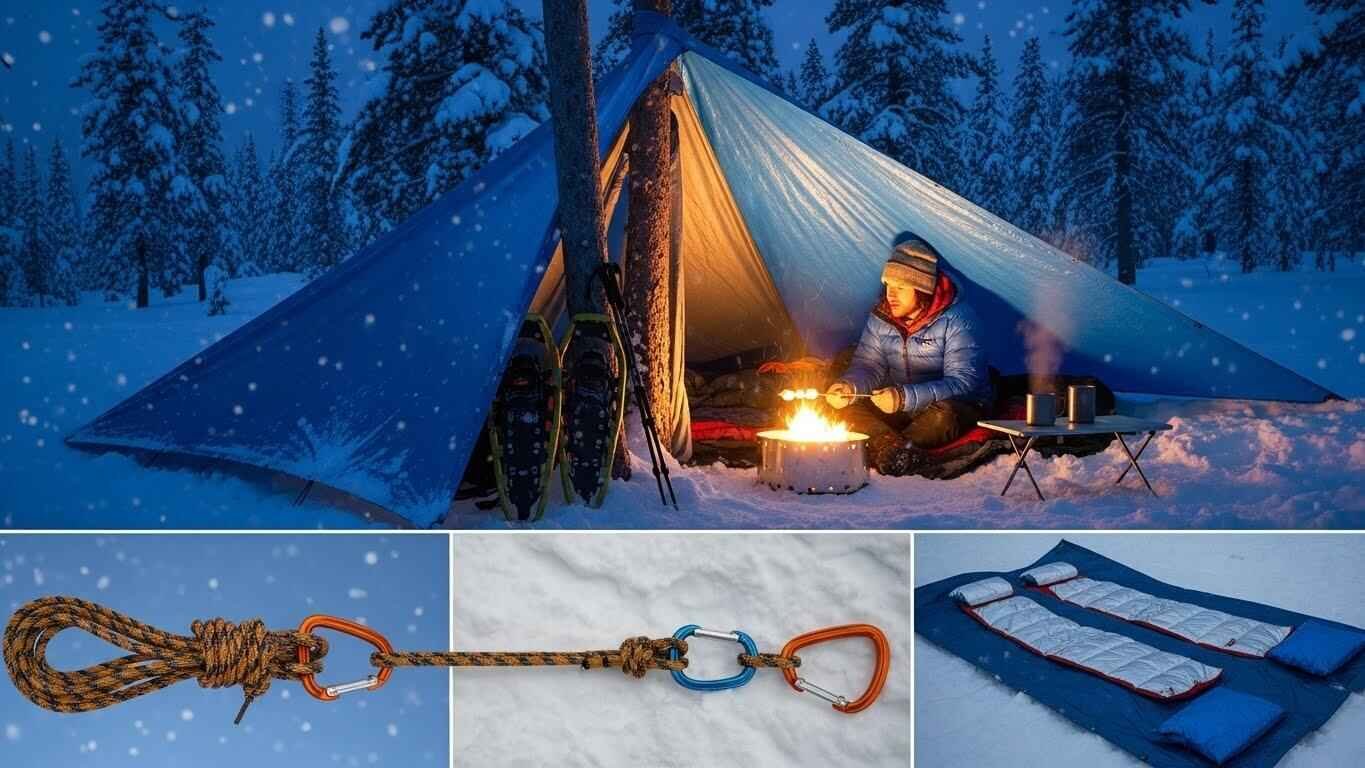
Noise prevents sleep. Tarp flapping causes stress. Thus, tension lines are perfectly even. Use shock cords, if possible. These muffle wind gusts. Quiet tents seem warmer even to the mind.
Learning From Experience
Adjusting Setup Each Night
Every night is different. Change of wind direction, falling of snow. So, adjust the angles of the tarps every day. Smaller variations bring greater comforts. Cold spots are significant.
Keeping Notes for Future Trips
Next, record what went well. What kind of arrangement felt warm? Which ones didn’t work in the wind? Hence, learning will lead to better camps in the future. Theory does not work.
Final Thoughts
Winter camping requires careful planning; moreover, cold nights demand intelligent decision-making. Therefore, tarpaulins are the key to smart camping because they shield against wind and protect from snow, ensuring dryness throughout the night.
However, if properly deployed, tarpaulins can be insulators. Thus, the deployment of the Heavy Duty Tarpaulin and the Budget Tarpaulin requires the utmost expertise. Before camping, one needs to practice the setup. Safety considerations are essential.
Nonetheless, the stillness of the night, when camping during winter, can be enjoyed. Winter camping can be tackled with the help of such tips.
FAQs
Q: What Makes a Heavy Duty Tarpaulin Better for Winter Camping?
A heavy-duty tarpaulin resists snow and wind. Its edges are strengthened and made of thick materials to withstand damage from snow. The use of the tarpaulin retains the inside of your shelter warm. At the same time, it performs better on rough land as compared to a thin tarpaulin. For long journeys, consider its use.
Q: Can a Budget Tarpaulin Really Work in Cold Weather?
Yes, Budget Tarpaulin is also effective if chosen wisely. One must look for treated fabric and durable seams. In fact, avoid thin plastic, which may break in chilly weather. If set up properly and insulated, Budget Tarpaulin effectively resists wind and wet. Thus, even budget tarpaulins are effective as a winter shelter.
Q: Can The Rabbit Kit Be Used in Cold Weather?
The tarp can be pitched at a steep angle to allow the snow to slide off. Make all the lines tight before retiring for the night. The ends should be checked after any snowfall. Some sticks can be used at the ends where the fabric has stretched. At the same time, removing the snow when there are heavy storms will keep the shelter in good condition.
Q: How can I keep warm inside a tarpaulin shelter?
Keep the openings smaller at night to retain warmth. Reflective material can be used to reflect the warmth. Insulations made of pine needles or foam pads on the ground of the tent are also added. Conversely, a ventilation opening prevents condensation without allowing cold air entry.
Q: How Do I Manage Condensation in a Winter Tarpaulin Camp?
Removing condensation Ventilation comes as the most critical factor. Install small vents on high and low sides for the gentle exit of warm air. In this way, nothing is sealed tightly. In fact, without this factor, frost does not form inside, and gear stays dry.