 By Books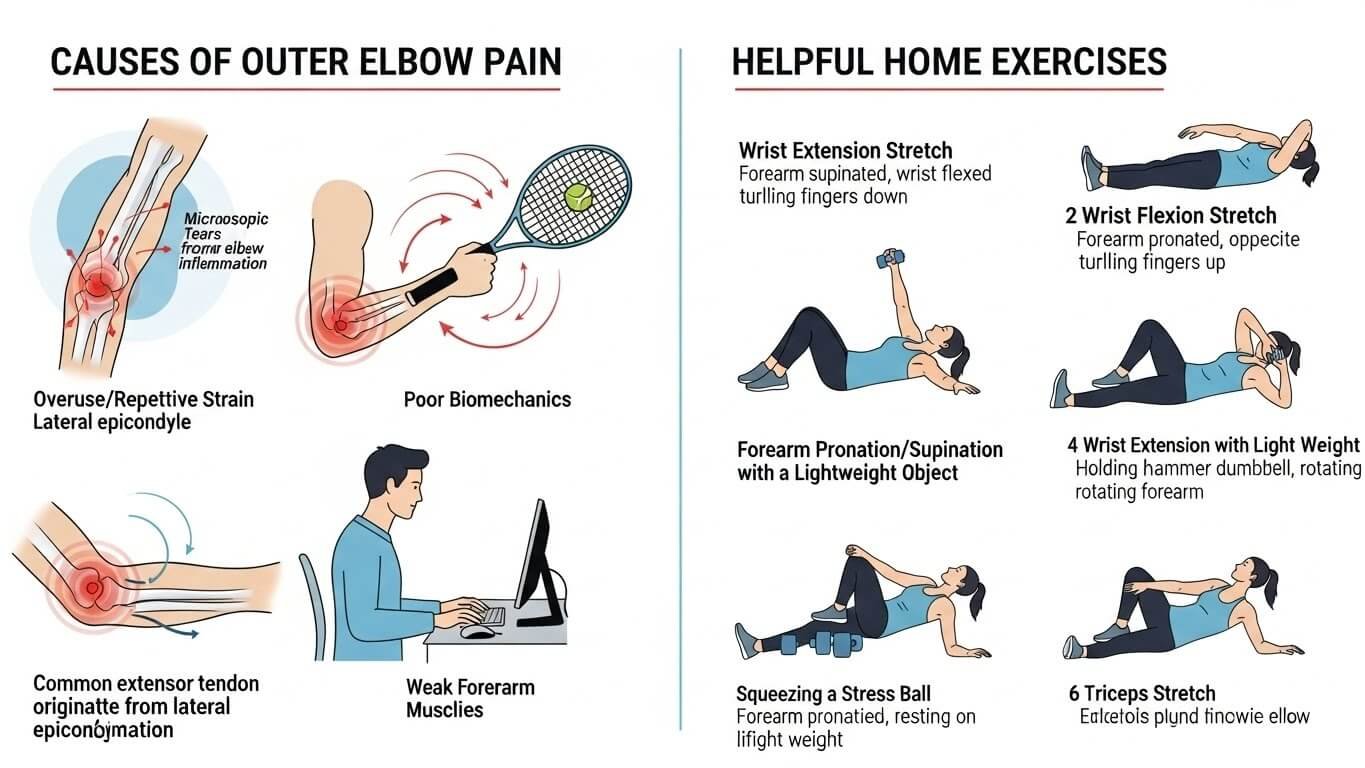
The elbow is an odd joint. It contains your ulnar nerve, which is a strange bone that hurts when struck in a particular way. Furthermore, the elbow is frequently disregarded as a crucial joint that keeps us independent.
Because the elbow is not a weight-bearing joint, not to mention it is rarely affected by arthritis or requires replacement, people may not give it much consideration.
Yet, pain in your elbow may not allow you to do anything that requires your arm, i.e., cook dinner or dress. And with this joint, you can take care of yourself.
Identifying the Causes of Outer Elbow Pain
Lateral epicondylitis, or Tennis elbow, is the most common cause of pain at the outside of the elbow. On the contrary, hardly anyone with this disease is a tennis player. It occurs every time tendons that attach to the outer side of the elbow are overworked or inflamed. These tendons also support the movements shown by the wrist and the fingers, and very often being strained regularly can cause small tears, causing pain and inflammation.
This issue is primarily prevalent in individuals who frequently use their hands to hold, twist, type, or lift objects. The problem can be connected with such occupations as carpentry, plumbing, painting, or excessive time at the computer. Examples of repetitive household duties include cleaning and gardening, and this might slowly build up on the elbow.
The poor posture of the human body, weak muscles of the forearm, or abrupt changes in activity are the reasons why the tendons are more vulnerable to damage.
The Distinctions Between Tennis Elbow and Other Elbow Pain Types
Other disorders might cause similar discomfort, even though tennis elbow is among the most prevalent causes of outer elbow pain. For instance, inflammation of a neighbouring nerve results in radial tunnel syndrome, which can cause agonising discomfort that seems somewhat comparable. Elbow pain can also be a symptom of joint arthritis, particularly in older people.
Tennis elbow, on the other hand, is unique in that the discomfort mainly concentrates on the bony bump on the outside of the elbow and frequently intensifies whenever lifting goods, shaking hands, or extending the wrist. The ability to differentiate tennis elbow from other causes ensures that the appropriate recovery strategy is applied.
Strengthening as well as stretching activities frequently become crucial components of the recovery procedure, given that the tendons are directly impacted. Although the forearm muscles and tendons must progressively regain flexibility and strength, rest alone is rarely sufficient.
The Benefits of Home Workouts for Recovery
The tendons surrounding the elbow are part of the human body’s amazing capacity to mend itself if it gets the proper assistance. Exercises performed at home improve blood flow to the irritated region and develop the forearm muscles, which are connected to the afflicted tendons. Improved circulation allows the tissue to receive more oxygen as well as nutrients, which aids in the healing of microtears.
Additionally, strengthening exercises lessen the strain that everyday tasks exert on the tendon. Stretching gently regularly helps ease tense muscles and stop additional strain. Several individuals find that their range of motion enhances, as well as their pain eventually lessens, with regular practice.
Since you may adjust the intensity, at-home exercises are particularly beneficial for both mild and moderate instances of Treatment For Tennis Elbow UK.
Stretching Activities to Alleviate Pain in the Outer Elbow
Extending the afflicted arm in front of you with the elbow straight and the palm pointing downward is one of the easiest and most efficient stretches for outer elbow pain. Gradually pull the hands down with the other hand until you experience a stretch over the pinnacle of your forearm.
The muscle mass can loosen up if you hold this position for 20 to 30 seconds. The movement can be repeated a couple of times a day to relieve stiffness in addition to reducing tendon tugging. Turning the palm upward and gently pressing the hands down closer to the floor is another useful stretch. This role targets various forearm muscle tissues that could also be responsible for elbow tightness.
These two stretches are easy to incorporate into regular exercises because they are gentle and can be finished at any time of day.
Conclusion
Pain in the outer elbow can be demanding, in particular if it gets in the way of day-to-day sports. However, recovery is probably extensively improved by way of comprehending its reasons and adhering to an everyday exercise regimen. Over time, many humans find out that a mixture of eccentric, strengthening, and stretching workout routines lessens soreness.