 By Sundar Pichai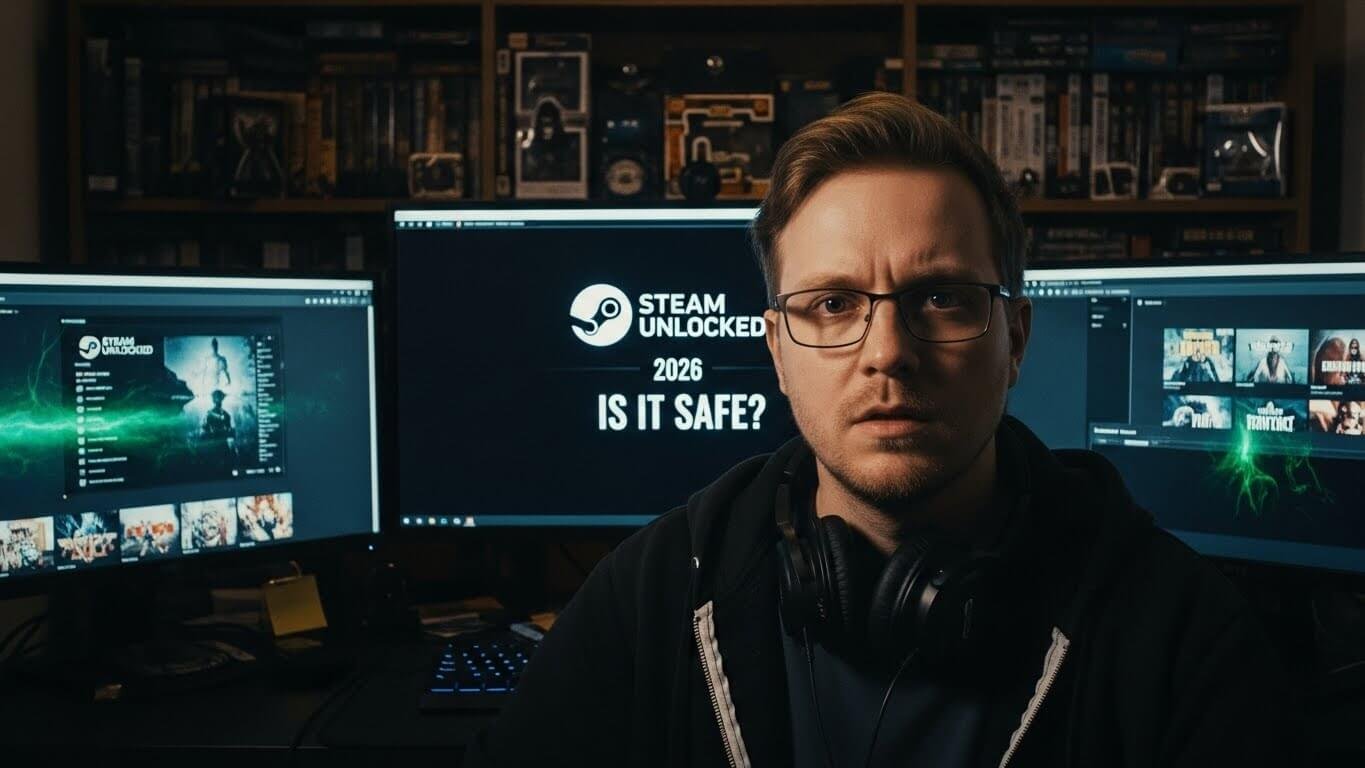
You’re staring at a $70 price tag for the latest AAA game everyone’s playing. A quick search leads you to Steam Unlocked, promising that same game completely free, pre-installed, no strings attached.
Sounds perfect. But is it?
As someone who’s been gaming on PC for over a decade and seen countless friends navigate the piracy vs. budget gaming dilemma, I’m breaking down everything you need to know about Steam Unlocked in 2026. This isn’t a lecture—it’s honest talk from one gamer to another about safety, risks, and better alternatives that actually exist.
What Exactly Is Steam Unlocked?
Steam Unlocked is a website that distributes cracked PC games for free. These are copyrighted games that have had their Digital Rights Management (DRM) protections removed, allowing anyone to download and play without purchasing from official platforms like Steam, Epic Games, or GOG.
The site markets itself as offering “pre-installed” games, meaning you download, extract, and play without complicated installation processes. This convenience factor attracts users looking for simpler alternatives to traditional torrent-based piracy.
However, there’s a critical detail: these are pirated games distributed without authorization from developers or publishers. The games come from various cracking groups, then get uploaded to file-hosting services that Steam Unlocked links to.
How It Actually Works
You don’t download directly from Steam Unlocked. Instead, the site redirects you to third-party file hosts like UploadHaven, MixDrop, or similar ad-supported platforms. You navigate through these sites, deal with advertisements and pop-ups, and then download compressed game archives.
After extraction, you run the game executable that’s been modified to bypass Steam’s authentication. No Steam account needed, no purchase verification, just direct play.
Is Steam Unlocked Safe? The Honest Reality
Here’s the complicated truth: user experiences vary dramatically.
What Users Actually Report
Browsing gaming subreddits and forums reveals mixed experiences. Many users download multiple games without immediate problems. Their antivirus doesn’t flag anything, games run smoothly, and nothing obviously suspicious appears.
However, a significant number of users report serious issues, including persistent malware that antivirus software can’t completely remove, cryptocurrency miners running in the background, degrading performance, Steam accounts compromised weeks after downloading cracked games, and system instability that requires Windows reinstallation.
The challenge is that malware doesn’t always announce itself immediately. A keylogger might collect passwords for months before you notice unauthorized account access.
The Technical Security Problem
Cracked games require modifying executable files to bypass DRM. This same technique is used by malware to infect systems. This creates an impossible situation for antivirus software—should it flag the crack as potentially dangerous, or allow it through?
Most cracks trigger antivirus warnings. Some are false positives. Others are genuine threats. Even security professionals struggle to distinguish between legitimate cracks and malware disguised as cracks.
The File Hosting Risk
Steam Unlocked doesn’t host files directly. Downloads route through third-party file hosts filled with aggressive advertising, fake download buttons designed to trick you, pop-ups that can trigger malware, and redirects to suspicious sites.
Even if the game file itself is clean, navigating the download process exposes you to multiple security risks.
Real Malware Threats You Should Know
Let’s be specific about what could actually happen.
Cryptocurrency Miners
These programs use your GPU and CPU to mine cryptocurrency for someone else. You’ll notice your computer running hot, electricity bills increasing, and performance drops in games you’re actually playing. Some miners are sophisticated enough to throttle when you’re actively using the computer, making them harder to detect.
Information Stealers
These programs specifically target saved passwords, browser cookies, authentication tokens, and Steam session data. They operate silently, collecting information over time before exfiltrating everything to remote servers.
This is how people lose Steam accounts, email access, and even financial information weeks after downloading what seemed like a working game.
Keyloggers and Remote Access
Keyloggers record every keystroke, capturing passwords and credit card information as you type. Remote access trojans (RATs) give attackers complete control over your computer, allowing them to access files, activate webcams, or use your system for illegal activities.
Why Antivirus Isn’t Enough
Running antivirus software provides some protection, but it doesn’t solve the fundamental problem.
The False Positive Dilemma
Cracks modify game files to remove DRM. Malware modifies files to infect systems. Both behaviors look identical to antivirus heuristics.
You’ll get warnings about “potentially unwanted programs” or “generic trojan detections” for both clean cracks and actual malware. How do you tell the difference? Even experienced users struggle with this.
The Exclusion Problem
Standard advice in piracy communities: “Add the game folder to antivirus exclusions so it doesn’t delete the crack.” This advice is sometimes necessary for legitimate cracks, but it completely disables protection for that folder.
You’re essentially flying blind, trusting anonymous uploaders with full access to your system because the technical requirements of piracy conflict fundamentally with security measures.
Legal Concerns: What You Should Understand
Let’s address the legal situation with facts instead of fear-mongering.
The Realistic Risk
In most Western countries, copyright holders primarily pursue large-scale distributors, not individual downloaders. The entertainment industry learned from the 2000s that suing individual file-sharers generates bad publicity without effectively reducing piracy.
Your realistic legal risk as an individual downloader remains low. However, “low” doesn’t mean zero.
ISP Monitoring
Some internet service providers monitor network traffic for piracy-related activity. If detected, you might receive copyright infringement warnings. Multiple warnings can result in throttled internet speeds, additional monitoring, or service termination.
VPN usage masks activity from ISPs, but quality VPNs cost money, which negates the financial benefit of pirating games.
Regional Variations
Legal enforcement varies dramatically by location. Some countries actively prosecute piracy with fines. Others have minimal enforcement. Your specific risk depends entirely on where you live.
Why Gamers Still Risk It
Understanding motivation helps identify viable alternatives.
The Pricing Reality
New AAA games cost $60-70 USD. That represents different economic realities depending on location and income. For students or young adults with limited income, these prices mean choosing between gaming and other necessities.
Regional pricing helps, but doesn’t fully account for purchasing power differences across countries.
The Try-Before-Buy Problem
Game demos have largely disappeared. Without demos, you’re gambling money on marketing promises. When games release broken or misrepresented (Cyberpunk 2077, No Man’s Sky at launch), that $70 feels like theft in reverse.
Access to Older Games
Some older titles are no longer sold through official channels. Abandoned games or titles removed from digital storefronts become inaccessible through legitimate means, driving users toward piracy as the only option.
10 Legitimate Alternatives That Actually Work
Here are real solutions based on years of budget gaming experience.
1. Epic Games Store Weekly Free Games
Every Thursday, Epic Games releases a free game. These aren’t demos or trials—they’re complete games you keep permanently. Since 2018, Epic has given away hundreds of games worth thousands of dollars in retail value.
Past giveaways included GTA V, Control, Borderlands 3, and many other quality titles. Create a free account and claim weekly.
2. Xbox Game Pass for PC
For $10 monthly, Game Pass provides access to over 400 games, including day-one releases of major titles. If you play even two games per month, you’ve exceeded the subscription value.
Many students get discounted access through educational programs.
3. Steam Free-to-Play Games
Steam hosts hundreds of free-to-play games that aren’t trials—they’re complete games monetized through optional cosmetic purchases. Quality titles include Counter-Strike 2, Dota 2, Warframe, and Team Fortress 2.
These games provide hundreds of hours of entertainment without spending anything.
4. GOG Giveaways
GOG.com regularly runs giveaways providing DRM-free games you own permanently. While less frequent than Epic, they often include classic titles worth playing.
5. Amazon Prime Gaming
If you have Amazon Prime (or know someone who does), Prime Gaming includes 5-10 free PC games monthly. These are yours to keep permanently, not temporary access.
6. Humble Bundle
Humble Bundle sells game bundles for $1-12 containing 5-10 games. You choose how much to pay and can direct proceeds toward charity. This service has provided legitimate games to budget-conscious gamers since 2010.
7. Itch.io
This indie marketplace hosts thousands of free games from independent developers. Quality varies, but exploration uncovers unique experiences unavailable elsewhere. Many developers offer pay-what-you-want pricing.
8. Steam Sales
Steam runs major sales four times yearly with discounts up to 90%. Wishlist games you want, and Steam notifies you when they’re discounted. A patient approach means playing yesterday’s AAA titles at budget prices.
9. Game Pass Ultimate
Combines Xbox Game Pass, EA Play, and cloud gaming for one price. The catalog rotates, but constant additions mean fresh content regularly.
10. Patient Gaming
Games drop in price dramatically after 1-2 years. Waiting means playing fully patched versions with all DLC at fraction of launch prices. Join r/patientgamers for community support.
Building a Gaming Library on Zero Budget
Here’s a practical strategy for building a substantial library without spending money.
First Six Months
Claim every Epic Games weekly freebie regardless of immediate interest. In 26 weeks, you’ll have 26+ games costing nothing.
Add Steam free-to-play titles matching your preferred genres. Find one competitive multiplayer game for long-term play.
Cost: $0
After One Year
You’ll have 52+ games from Epic, plus whatever Steam free-to-play titles you enjoy. That’s a substantial library without spending anything.
If you can budget $10-20 annually, wait for Humble Bundle’s best deals and grab one quality bundle.
If You Still Consider Steam Unlocked
I understand legitimate financial constraints exist. If you’re determined to proceed despite risks, at least minimize harm.
Harm Reduction Steps
Create a separate Windows user account specifically for testing cracked games. Never log into Steam, Epic, or any gaming account from this environment.
Scan every download with multiple antivirus tools. Research specific detection warnings—not all flags are equal.
Accept that you’re taking genuine security and legal risks. The question isn’t whether risks exist, but whether you understand and accept them.
The Developer Perspective
Games require years of work from teams of people. When you pirate games, you’re not stealing from faceless corporations but from artists, programmers, and designers who created something they hoped you’d enjoy.
Indie developers especially feel piracy’s impact. A small team spending years on a passion project depends on sales for survival.
If you enjoy a pirated game, consider purchasing it later when financially possible. Many developers understand economic hardship and appreciate support even years after release.
Conclusion
Steam Unlocked represents unnecessary risk when legitimate alternatives exist. The site operates in legal gray areas and exposes users to genuine security threats.
You don’t need to compromise your computer security to game on a budget. Epic Games alone provides enough free quality games to keep you entertained indefinitely.
Building a legal library takes patience, but results in games you actually own, that receive updates, and that don’t risk your digital security.
Gaming should be fun, not stressful. Choose options that let you play without constantly worrying about viruses or legal consequences.
Frequently Asked Questions
Can Steam detect and ban me for pirated games?
Steam cannot detect cracked games running on your system since they operate offline without Steam integration. However, discussing piracy on Steam forums or attempting to connect cracked games to Steam can result in account action.
What’s the real infection risk from Steam Unlocked?
User experiences vary significantly. Some download dozens of games without issues. Others encounter malware, miners, or stealers. The unpredictability itself is the primary risk—you can’t reliably predict whether your download will be clean.
Are established cracking groups safer?
Generally yes. Groups like FitGirl have reputations to maintain and have released games for years without major incidents. However, impersonation is common—fake sites claiming affiliation with legitimate groups distribute malware.
How do free-to-play games make money?
F2P games rely on approximately 2-5% of players spending money on cosmetics and convenience items. These spenders subsidize the majority who play free. The model works because free players provide matchmaking pools and community size that attract paying customers.
What if I already downloaded from Steam Unlocked?
Run comprehensive scans with multiple antivirus tools, including Malwarebytes and Windows Defender. Change all important passwords from a different clean device. Enable two-factor authentication on critical accounts. Monitor for suspicious activity.
Why don’t publishers just lower prices?
Publishers optimize for revenue rather than player count. Economic analysis shows that a small percentage of high-spending customers generates the majority of revenue, so publishers price for this demographic rather than broader markets.