 By Sundar Pichai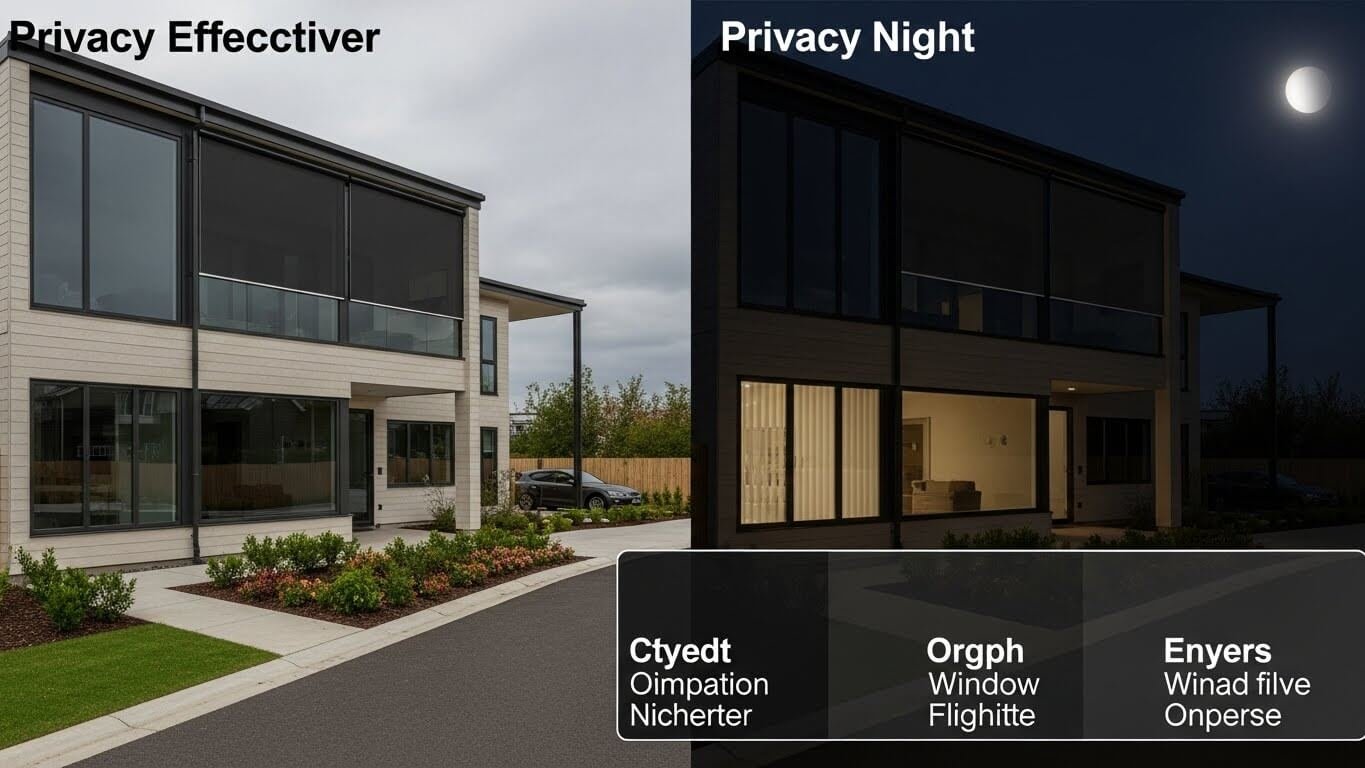
Introduction: Why Home Privacy Has Become a Real Concern
Homes today are brighter and more open than ever. Large windows, glass doors, and modern layouts bring in natural light—but they also make it easier for outsiders to see in. For many homeowners, this creates a quiet discomfort that curtains alone don’t always solve.
Privacy window tinting for homes has emerged as a practical middle ground. It allows daylight to flow in while reducing visibility from outside, offering privacy without making rooms feel closed off. Whether you live on a busy street, face nearby neighbors, or simply want more control over your space, window tinting can be an effective solution.
This guide explains how residential privacy window tinting works, what really happens during the day and at night, and how different film types perform in real homes—so you can make an informed, realistic decision.
What Is Privacy Window Tinting?
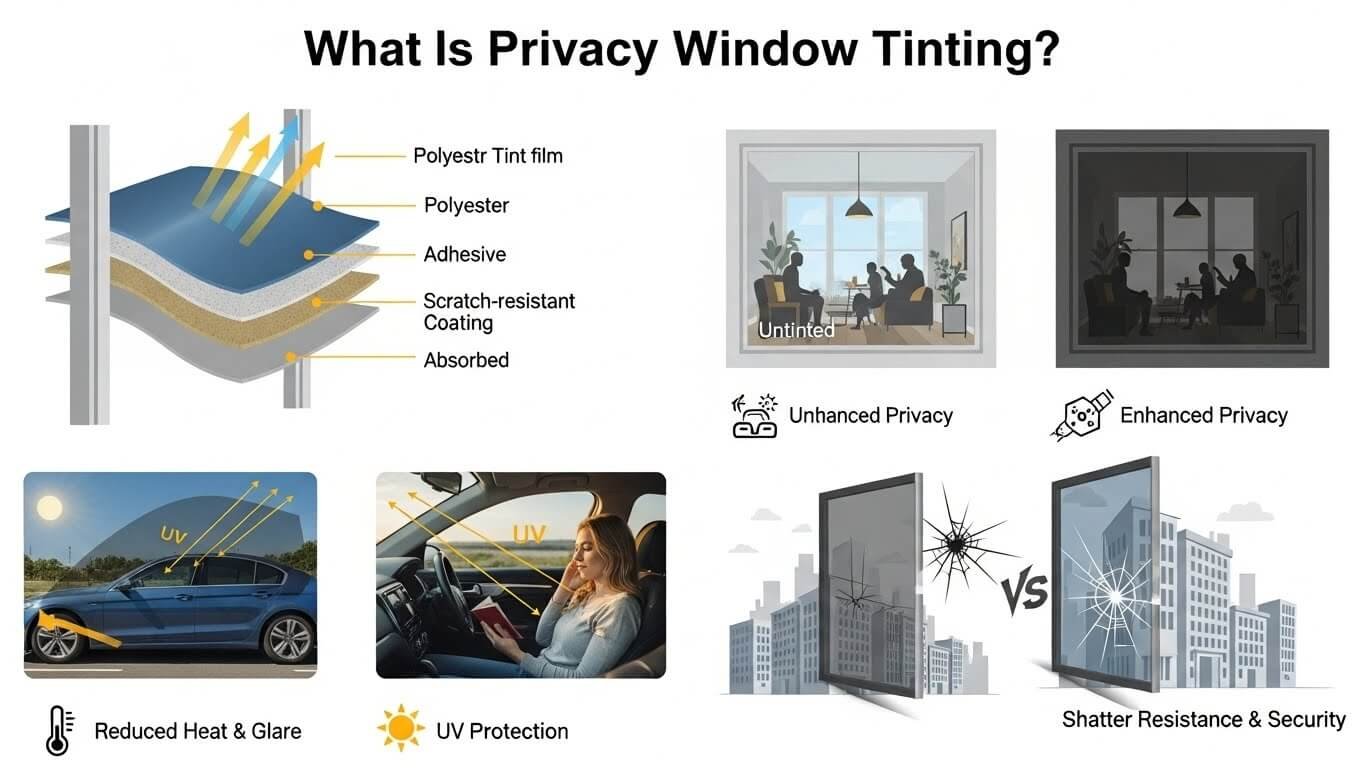
Privacy window tinting involves applying a thin film to existing glass to limit visibility while preserving light. These films are designed to change how light passes through the window, making it harder for people outside to see inside.
Unlike replacing windows or installing permanent privacy glass, tinting is:
- More affordable
- Less disruptive
- Customizable by room and need
Most films are applied directly to the interior side of residential windows and are designed to last for years with proper care.
How Privacy Window Tinting Works in Real Life
Privacy tint works by controlling light balance and visual clarity. When the outside is brighter than the inside, many films reduce inward visibility. When lighting conditions change, performance can change too.
This is why understanding day vs night behavior is essential before choosing a film.
Daytime Privacy: What You Can Expect
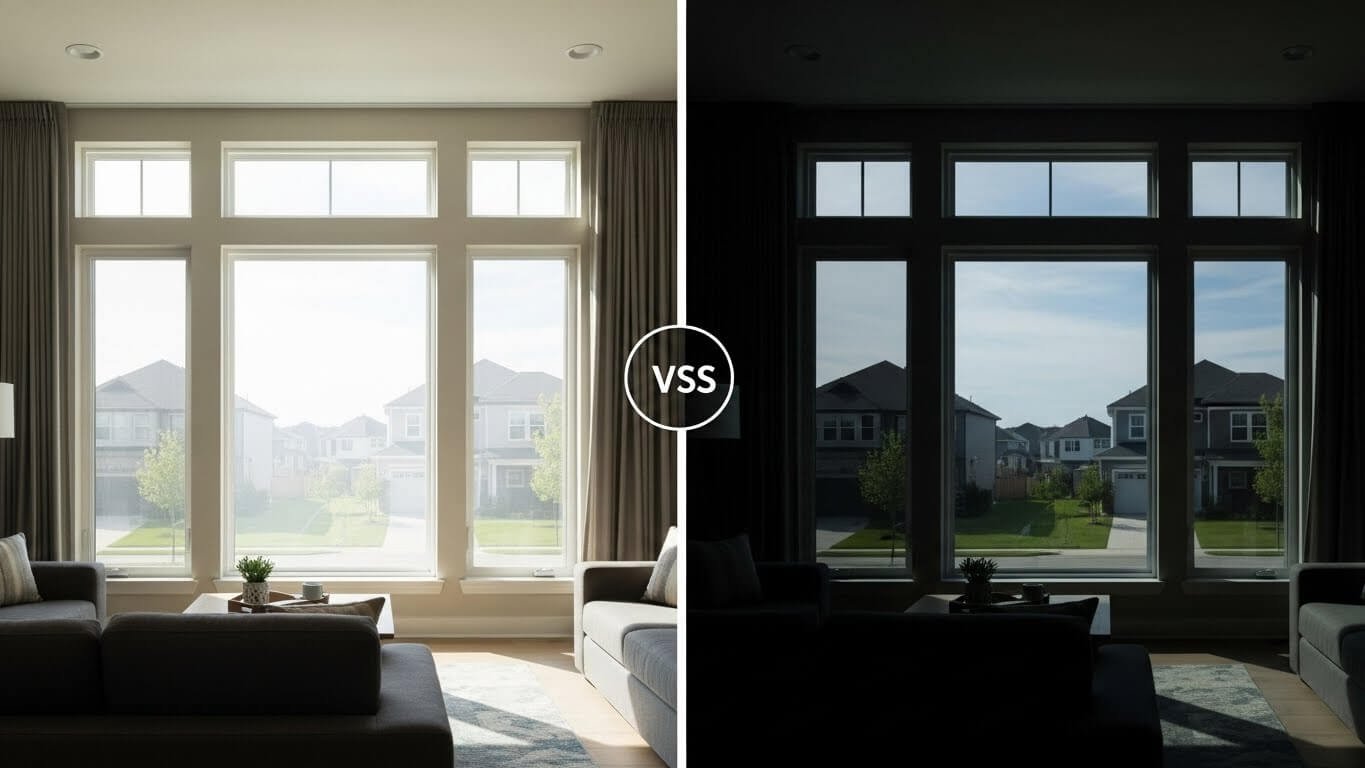
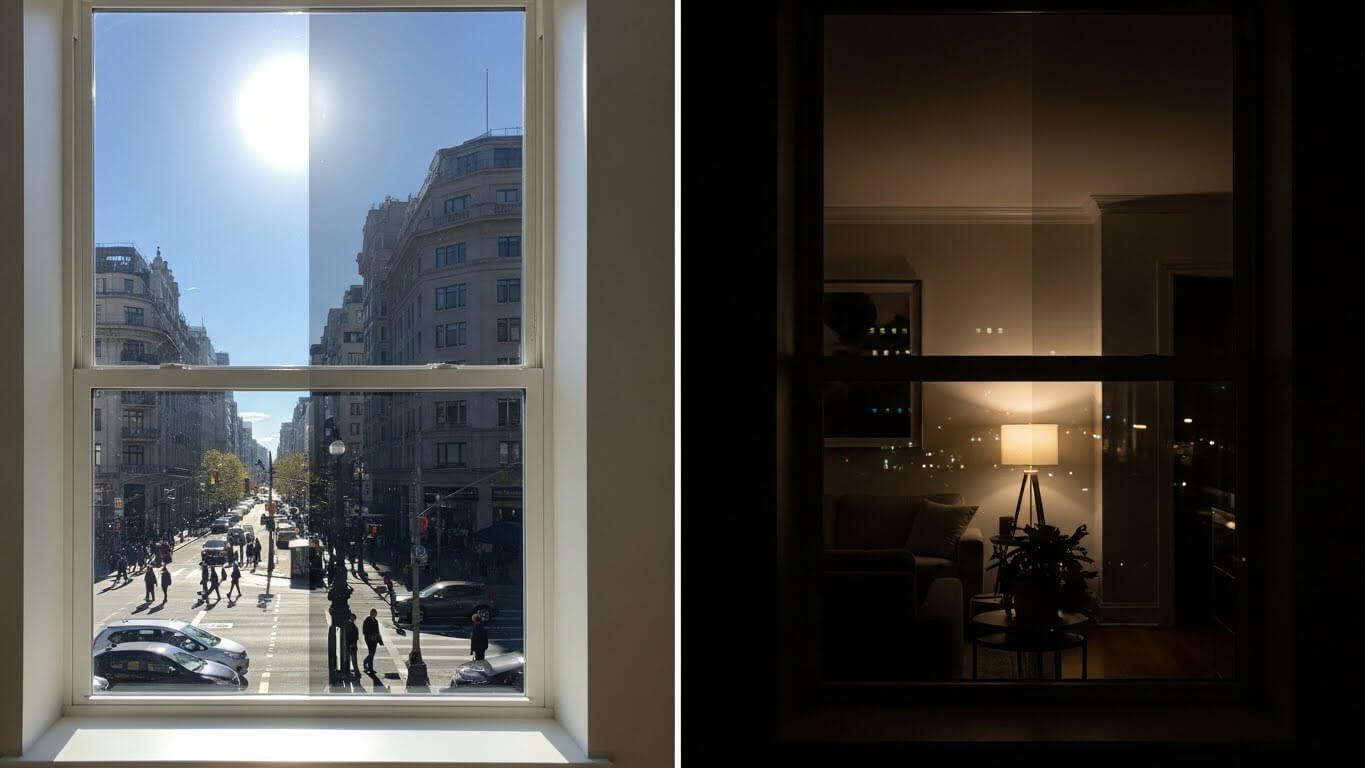
During the day, privacy window tinting works best. Sunlight outside is typically stronger than indoor lighting, which allows certain films to create a reflective or darkened appearance from the exterior.
Why Daytime Privacy Works Well
- Exterior brightness limits visibility indoors
- Reflective or tinted films amplify this effect
- Rooms remain bright without blinds or curtains
For street-facing living rooms or front-facing windows, daytime privacy tinting can feel like a major upgrade.
Night-Time Privacy: The Reality Most People Miss
Night-time privacy is where expectations often clash with reality.
Once the sun sets and interior lights are turned on, the lighting balance reverses. This means many standard films no longer prevent visibility from outside.
Important Truth About Night Privacy
No standard window tint guarantees full night-time privacy on its own. This is not a flaw—it’s physics.
However, that doesn’t mean privacy tinting is useless at night. It just needs to be chosen carefully and sometimes paired with other solutions.
Window Tint for Day and Night Privacy: What Actually Works
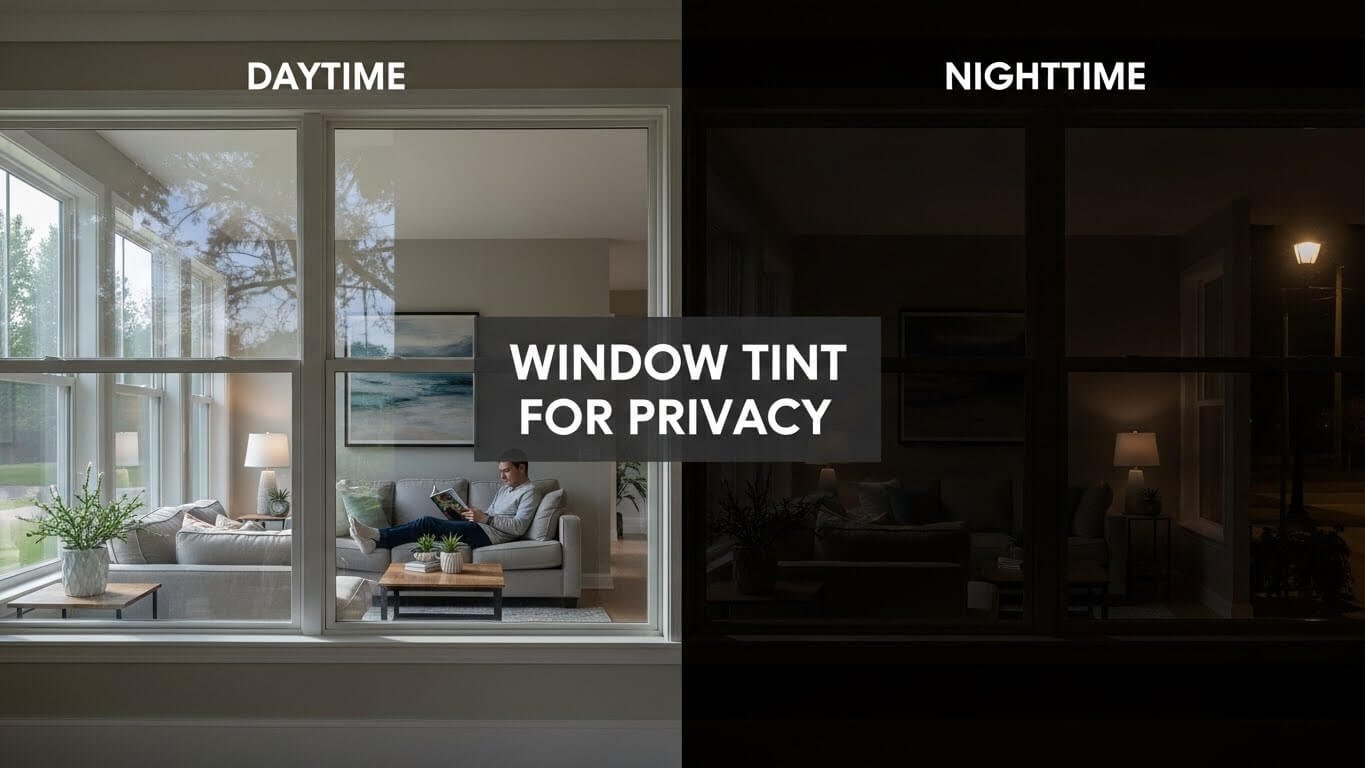
If night-time privacy is a priority, certain film types perform better than others.
Effective Night Privacy Options
- Frosted or etched privacy films
- Decorative privacy window films
- Darker non-reflective tints (limited visibility)
- Tint combined with curtains or smart lighting
Frosted films don’t rely on light balance, which makes them one of the most reliable options for 24-hour privacy.
Types of Privacy Window Tint Films for Homes
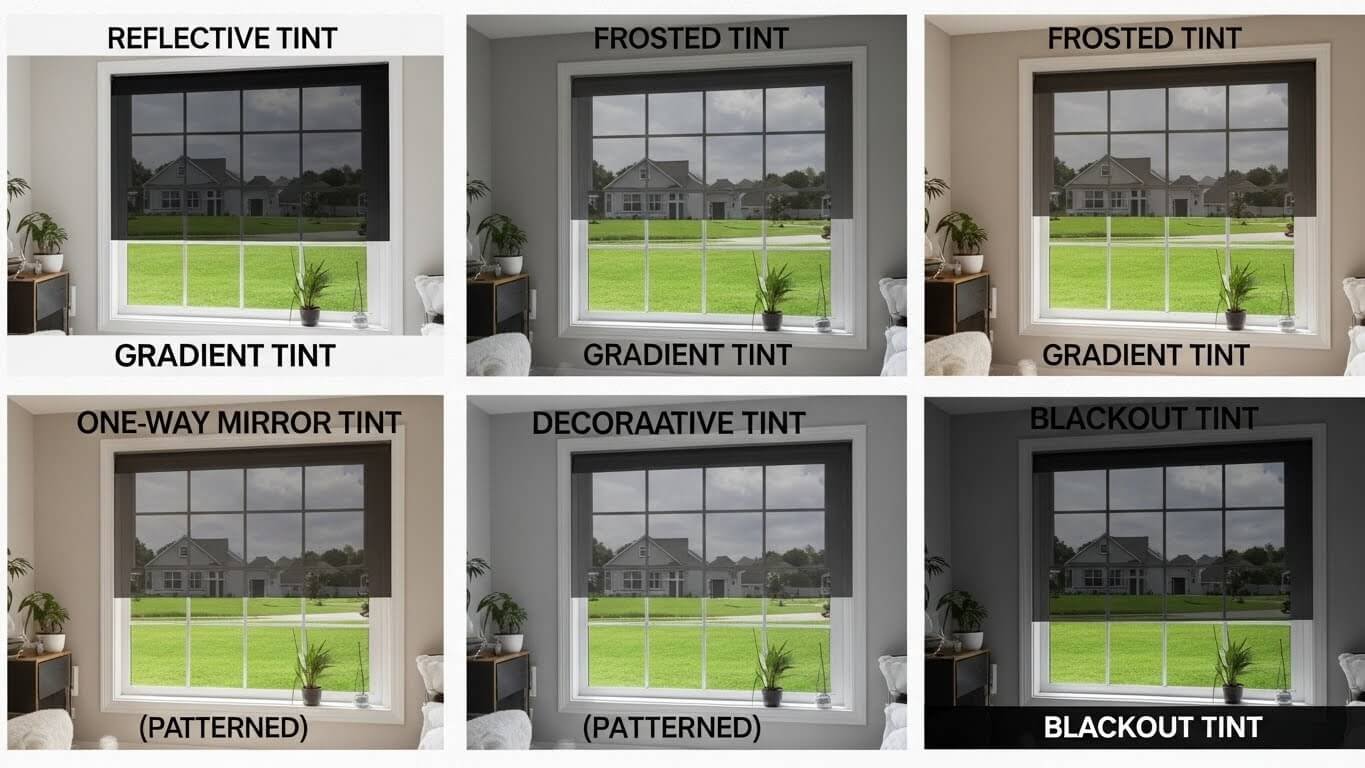
Understanding film types helps you match the right solution to each room.
One-Way Privacy Window Tint
One-way privacy films are popular for daytime use. They create a mirrored appearance from the outside when exterior light is stronger.
Best for:
- Living rooms
- Front-facing windows
- Urban or street-level homes
Limitations:
- Reduced privacy at night
- Requires lighting awareness indoors
Frosted Privacy Window Tint Film
Frosted films blur visibility rather than darken it. They offer consistent privacy regardless of lighting conditions.
Best for:
- Bathrooms
- Entry doors
- Bedrooms facing neighbors
Advantages:
- Works day and night
- Allows soft light through
- Modern, clean appearance
Tinted Privacy Window Film
Tinted films reduce visibility by darkening the glass slightly. They also help with glare control.
Best for:
- Bedrooms
- Sun-facing rooms
- Homes needing light control and mild privacy
Note: Darker doesn’t always mean more private at night.
Choosing Privacy Window Tint by Room
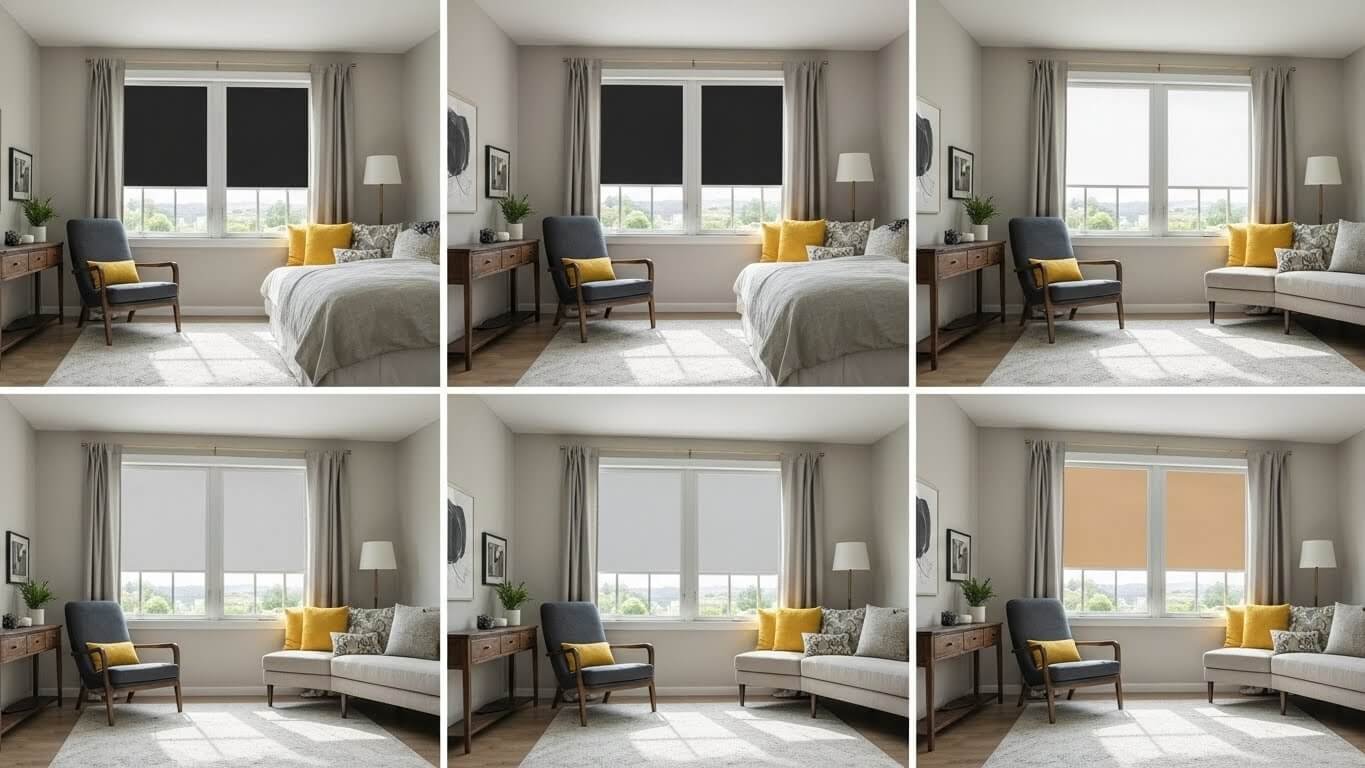
Privacy needs change from room to room. A film that works perfectly in a sunlit living room may fail in a bathroom or bedroom. Factors like window placement, lighting patterns, time of use, and surrounding buildings all influence how effective a privacy tint will be.
The smartest approach is to treat each space individually. Instead of choosing one film for the entire house, match the film type to how the room is actually used—day vs night, public vs private, and how close neighbors or foot traffic are.
Living Rooms and Common Areas
Living rooms, dining areas, and open-plan spaces usually prioritize natural light and visibility from the inside out. These rooms are often used during the day, when exterior light levels are higher.
Best Privacy Tint Options
- One-way reflective window film
- Lightly tinted privacy film
- Neutral solar-control films with privacy benefits
These films reduce outside visibility during daylight hours while keeping the interior bright and open. They are especially effective for:
- Street-facing windows
- Homes near sidewalks or neighboring buildings
- Ground-floor apartments
Important Consideration
At night, when interior lights are on, these films lose most of their privacy effect. For evening use, homeowners often pair them with:
- Sheer curtains
- Roller shades
- Strategic indoor lighting placement
This layered approach maintains privacy without blocking daylight during the day.
Bathroom Window Privacy Tint
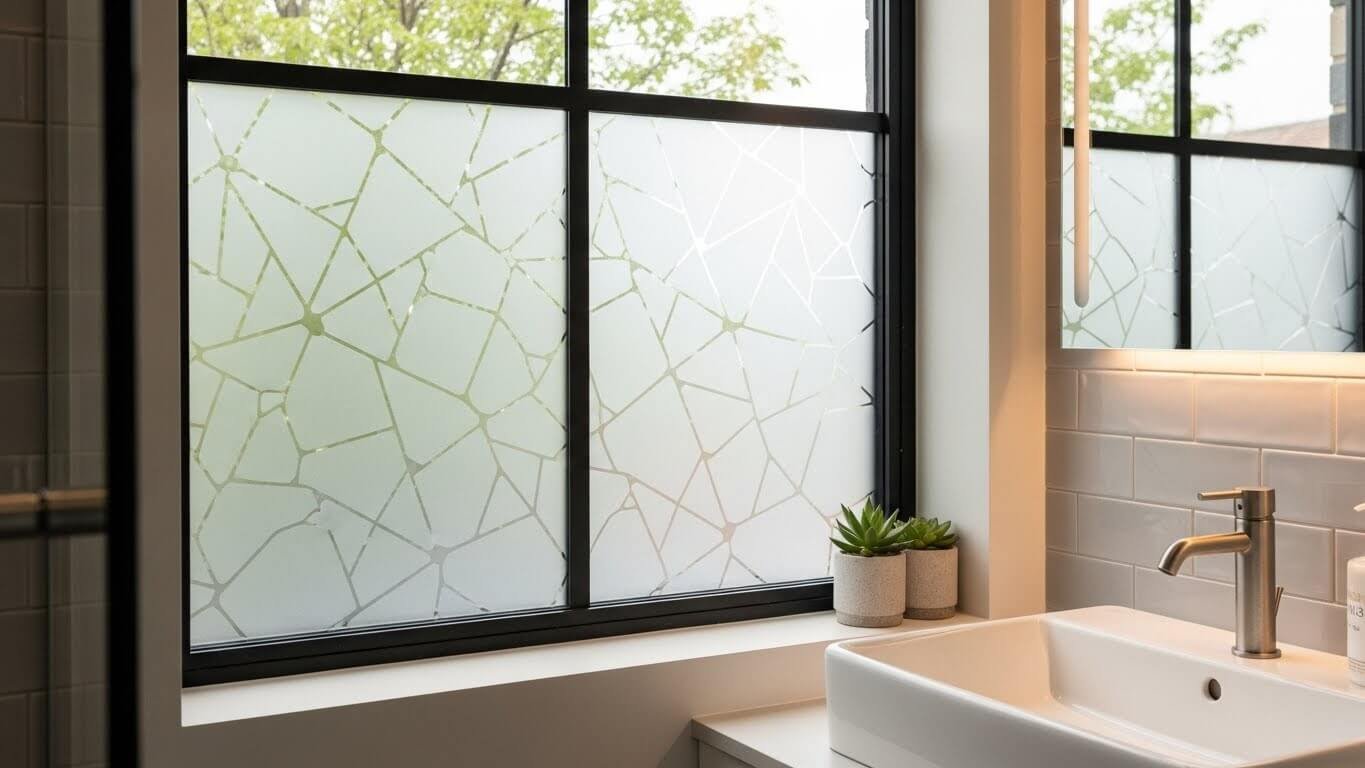
Bathrooms demand constant privacy, regardless of time of day or lighting conditions. Because bathroom lights are often used at night, reflective or one-way films are not reliable here.
Most Reliable Film Types
- Frosted privacy window tint
- Etched or sandblasted-style films
- Textured decorative privacy films
These films work by diffusing light, not reflecting it. This means:
- No clear visibility from either side
- Consistent privacy day and night
- Soft natural light still enters the room
Practical Benefits
- Eliminates the need for blinds or curtains in humid areas
- Maintains a clean, minimal look
- Ideal for bathrooms facing neighbors or shared spaces
Frosted films are widely considered the most dependable privacy solution for residential bathrooms.
Front Door and Entryway Glass
Front doors with glass panels or sidelights present a unique challenge. Homeowners want privacy without turning the entryway dark or unwelcoming.
Recommended Privacy Film Types
- Decorative privacy window film
- Frosted film with patterns or gradients
- Partial-coverage privacy designs
These films allow daylight into the entry while blocking direct lines of sight from outside. Many designs offer privacy at eye level while remaining clear near the top or bottom.
Why Entryway Tinting Works Well
- Prevents passersby from seeing inside the home
- Maintains a bright, open feel
- Adds subtle visual interest without heavy treatments
For homes on busy streets, entryway privacy tinting can significantly improve comfort without changing the door itself.
Bedroom Windows
Bedrooms require flexible privacy, since they are used both day and night. Unlike bathrooms, total opacity isn’t always necessary, but nighttime privacy is often important.
Effective Privacy Combinations
- Light or medium-tinted privacy film
- Curtains or blackout blinds for nighttime
- Frosted film for windows facing close neighbors
Tinted films help reduce daytime visibility and glare while still allowing outdoor views. At night, additional window coverings provide full control over privacy and light.
Room-Specific Considerations
- Street-facing bedrooms benefit from darker tints
- Upper-floor bedrooms may need less aggressive privacy
- Children’s bedrooms often use frosted or patterned films for safety and comfort
This layered approach offers privacy without permanently blocking light or views.
Privacy Glass vs Tinted Windows: A Common Comparison
Many homeowners compare privacy tinting to privacy glass before making a decision.
Privacy Glass
- Built into the window itself
- Requires window replacement
- Higher upfront cost
- Limited design flexibility
Tinted Windows
- Applied to existing glass
- Lower cost
- Customizable
- Easier to replace or update
For most homes, window tinting offers better flexibility and value.
Can You Tint Home Windows for Privacy?
Yes, most residential windows can be tinted safely.
Before installation, it’s important to consider:
- Glass type and age
- Existing coatings (such as Low-E glass)
- Manufacturer warranties
- Local building or HOA guidelines
Professional installers typically assess these factors to prevent issues.
Installation Options: DIY vs Professional
DIY Privacy Window Tinting
- Lower upfront cost
- Suitable for small windows
- Requires patience and precision
Professional Installation
- Cleaner finish
- Better longevity
- Warranty-backed work
For large windows or highly visible areas, professional installation often delivers better results.
How Long Does Privacy Window Tint Last?
High-quality residential films typically last 10 to 15 years when properly installed and maintained.
Maintenance Tips
- Use soft, non-abrasive cloths
- Avoid ammonia-based cleaners
- Allow curing time after installation
Proper care extends both appearance and performance.
Common Misconceptions About Privacy Window Tinting
- “It works the same at night” — It doesn’t
- “Darker is always better” — Lighting matters more
- “It blocks all light” — Many films preserve brightness
Clear expectations lead to better satisfaction.
When Privacy Window Tinting Makes the Most Sense
Privacy window tinting is ideal if you:
- Want natural light without exposure
- Prefer minimal window treatments
- Need privacy in specific rooms
- Want a flexible, non-permanent solution
Conclusion: Is Privacy Window Tinting Right for Your Home?
Privacy window tinting offers a smart, adaptable way to improve comfort without sacrificing light. When chosen based on room use and realistic expectations—especially for night-time performance—it can make your home feel more secure, private, and enjoyable.
Understanding film types and how lighting affects visibility is the key to getting results you’ll actually be happy with.
FAQs
Does privacy window tint work at night?
Some films offer limited night privacy, but frosted or decorative films work best after dark.
What is the best privacy window tint for homes?
The best option depends on the room. Frosted films are ideal for bathrooms, while one-way films suit living areas.
Can a privacy window tint be removed?
Yes, most residential privacy films can be removed without damaging the glass.
Does window tinting reduce heat as well?
Some privacy films also reduce glare and UV exposure, but not all are designed for heat control.
Is privacy tint suitable for rental homes?
Yes, many films are removable and suitable for rentals, but permission may be required.